
Intro
As citizens and (future) professionals, our students will be confronted with intricate challenges related to erratic and unpredictable changes, ambiguities and controversies. Therefore, equipping them with the necessary knowledge, competencies, attitudes and mindset – their impact capacity – to deal with these complex urgencies of current and future society needs to be integral in our education. Our Educational Vision and our joint approach to Impact-Driven Education guide the transition we are in and define our next steps. Some of these steps relate to a pedagogical or didactic perspective and are aimed at changing the student/teacher behaviours. Others relate more to the redesign of the classroom (and thus environment) by, for example, redesigning a curriculum and making use of specific tools. In the pages that follow, we share how staff in our Schools and BVs, also in collaboration with strategic projects and initiatives such as Impact at the Core, ErasmusX, Erasmus Verbindt and/or UNIC, are enabling and enhancing the societal impact of our education.
Building a supportive framework
Created to support EUR’s strategy, the primary goal of the EUR-central Impact at the Core (IatC) is to - in collaboration and co-creation with the Schools – prepare students to tackle complex societal issues and embed impact-driven education across our educational programmes. IatC emerged from a collaborative effort by a cross-school working group. This working group has resulted in a shared understanding of impact-driven education across all Schools, which has been instrumental to innovating EUR’s pedagogy and didactics to become impact-driven. Since its establishment at the beginning of this strategic period in 2019, IatC has helped EUR’s Schools with implementing impact-driven education at all levels: IatC’s policy advisors bring in new viewpoints and developments to the academics and leadership of the Schools, while their learning innovators help teachers to (re)design impact-driven education courses and programmes. To build structural relationships with societal partners while also helping teachers find the appropriate stakeholders for their specific education initiative, IatC’s knowledge brokers invest in building learning communities across Rotterdam and thematic networks. With these learning communities, IatC aims to enable students, teachers and stakeholders to work together on societal challenges. And through this collaboration and co-creation learn about the societal challenge and bring it a step further.
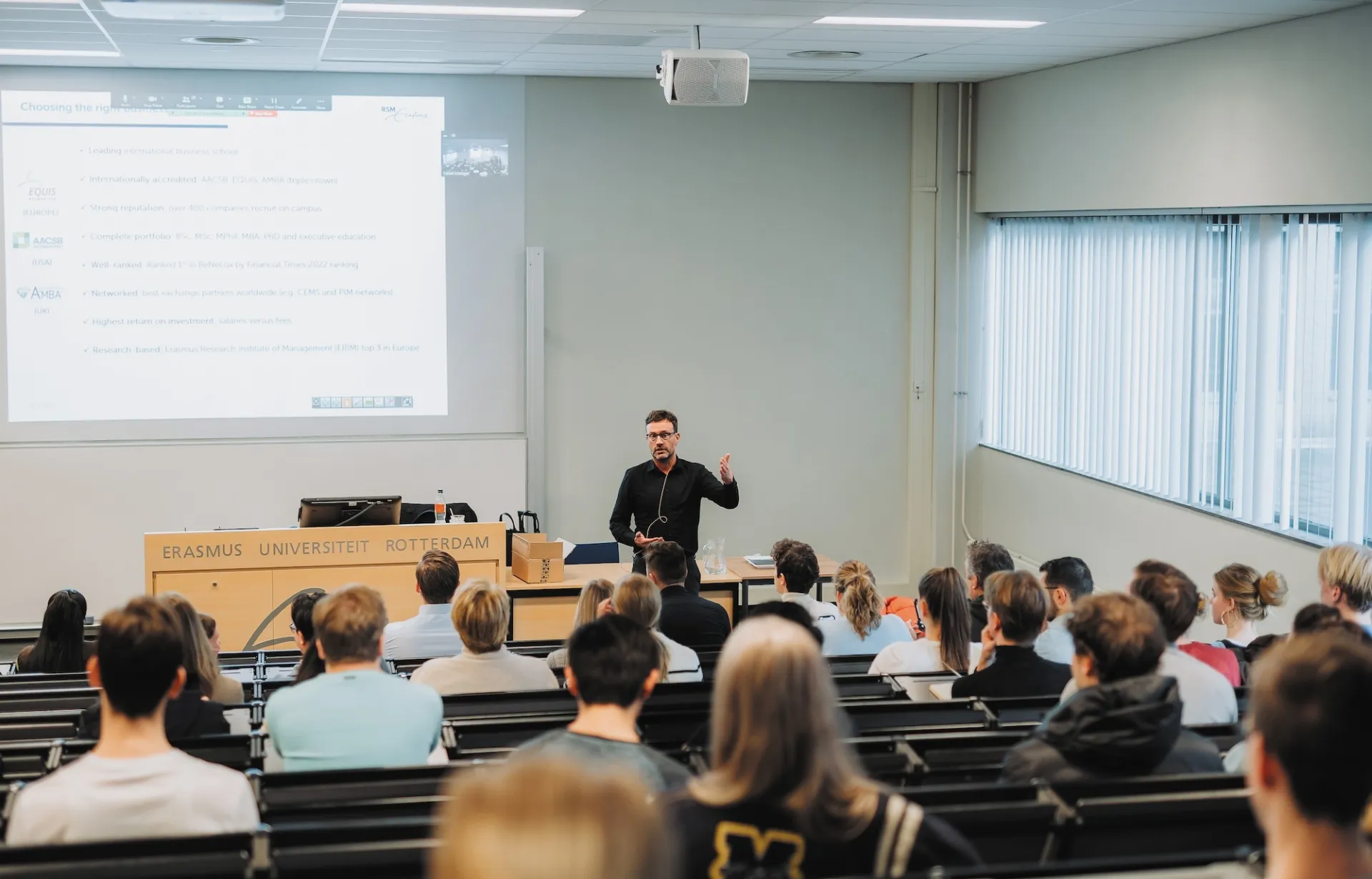
To assure the quality of education, our university is working to improve teachers' skills through a comprehensive training programme managed by the Community for Learning and Innovation (CLI). With the support of IatC, EUR offers short training courses, teaching support, and informal learning opportunities such as on-the-job support, coaching, and meetings with Communities of Practice specifically aimed at impact-driven education and informal learning. Co-creation and experimentation are key.
Formal training programmes (Microlabs) help teachers understand and implement impact-driven education, and informal learning is promoted through the Communities of Practice and on-the-job support from learning innovators. Another resource that can be used is Riipen: a facilitation tool that matches interested societal partners with our lecturers. IatC has also developed building blocks that create possible impact profiles or tracks for the third-year bachelor’s and courses as well as specialisations at the master’s level. The ambition is to integrate one impact-driven course into every programme across EUR. An example of how IatC facilitates the upscaling of impact-driven education is by enabling students who want to specialise in impact-driven education to join an impact profile in their bachelor programme and an impact track in their master programme.
So far, in partnership with the Schools, IatC has facilitated a significant transformation in EUR’s curriculum. Out of 123 programmes, 38 have already incorporated impact-driven education in collaboration with IatC, impacting over 10,570 students. Currently, all Schools are working on further implementing impact-driven education.
Innovating our pedagogy and didactics
In line with EUR’s ambitions to improve students’ impact capacities, all Schools are integrating impact into their curricula. Through a tailor-made approach—often with the support of several central-level initiatives—each discipline can implement impact-driven education in a way that fits their ambitions. In practice, this has led to the innovation of existing and development of new courses – often by integrating stakeholder engagement as an important mechanism. Stakeholder engagement offers students the opportunity to develop their impact skills and competencies, to work on real-life, unstructured and multifaceted cases, and to (in)directly contribute to societal challenges and issues. Concrete examples include:
- Implementing Erasmusarts 2030
- Infusing the Principles for Responsible Management Education into the curriculum
- Reinforcing the Legal Ethics trajectory bachelor’s and master’s programmes
- Increasing the involvement of external stakeholders in the curricula
- Implementing impact-driven education and sustainability in economics curricula
- Empowering students through Diversity, Inclusion, and Future of Work
- A Climate Just City of Rotterdam

Implementing 'Erasmusarts 2030'
Erasmus MC has reformed its entire curriculum through their educational vision ‘Erasmusarts2030’ (NL: ‘Erasmus medical doctor’), which aims to equip the doctors of tomorrow to deal with a changing and complex healthcare landscape. The ‘Erasmusarts’ of 2030 will act from a broad academic perspective and a solid (bio)medical knowledge base, consciously using technology to promote a healthy society. With ‘Erasmusarts2030’, Erasmus MC brings vision into practice through case-based teaching, project education, the formation of professional identities, programmatic testing, and teacher professionalisation.
Infusing the Principles for Responsible Management Education into the curriculum
Rotterdam School of Management (RSM) infuses the themes of the UN Global Compact’s Principles for Responsible Management Education (PRME) into its curriculum, co-curricular activities, and initiatives. The aim is to adopt sensitising mindsets to benefit society, the economy, and the environment, from the perspective that sustainability is the foundation of business.
From enrolment in their first course through achieving alumni status, students benefit from the integration of classroom education and out-of-class learning experiences on these targeted topics. One example: the revision of the ‘Sustainable Business Model’ course (MSc Global Business & Sustainability) for enhanced societal impact. The purpose of the redesign, led by Dr Taslim Alade jointly with IatC, Erasmus Verbindt (EV; EN: Erasmus Connects) and several external stakeholders, has been to enrich the course, enhancing both its societal impact and its impact on students’ learning experiences. Direct collaboration with societal stakeholders spanning diverse business sectors—including energy, fashion, entertainment and IT – has given students the chance to engage directly with these stakeholders, visiting them on-site to gain insights into their operations, challenges, and opportunities, and providing sustainable recommendations to their business models.
Reinforcing the Legal Ethics trajectory in bachelor’s and master’s programmes
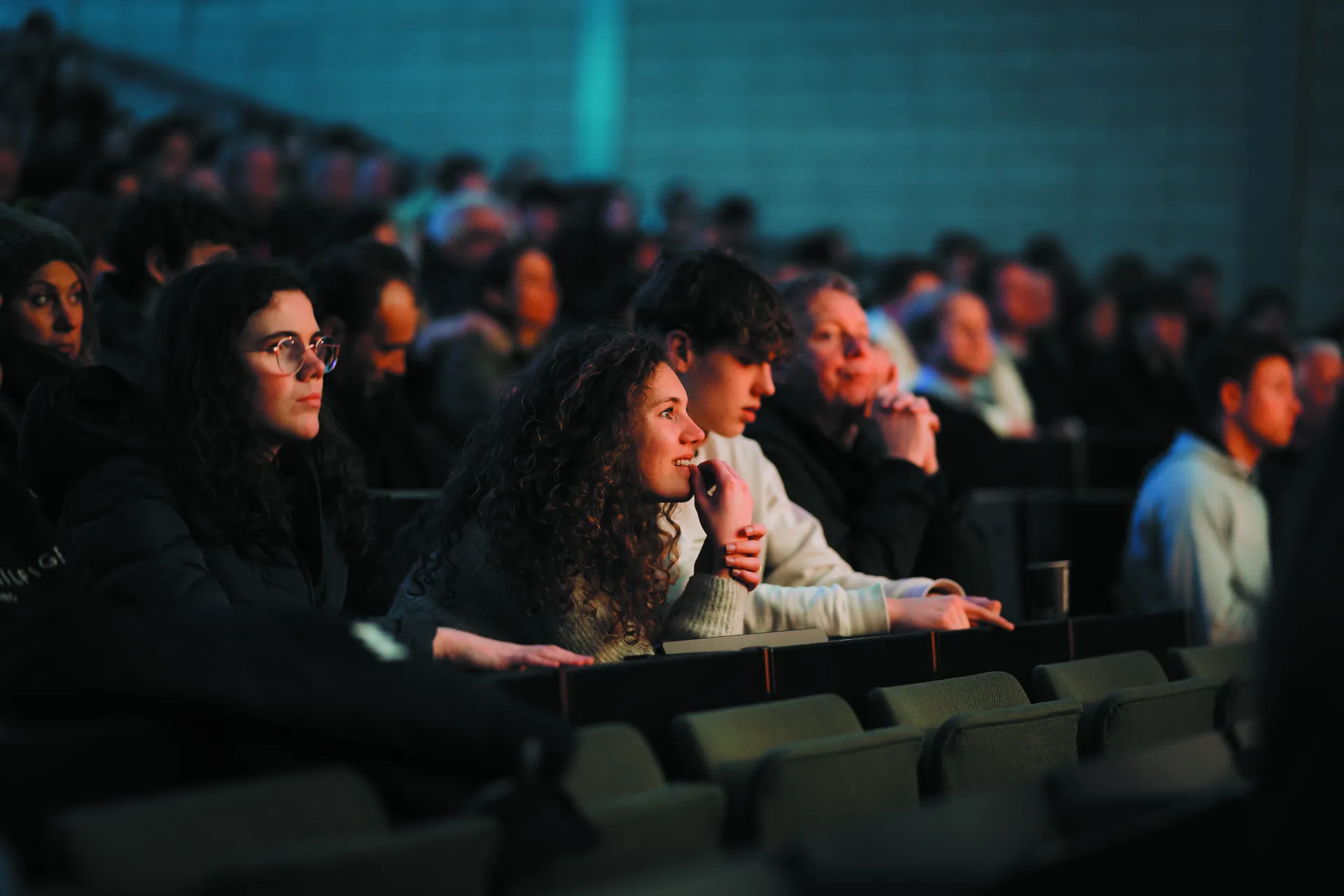
Erasmus School of Law (ESL) also teamed up with an IatC learning innovator to reinforce the Legal Ethics trajectory in ESL bachelor’s and master’s programmes. The legal profession increasingly demands graduates to be not only knowledgeable but also ethically aware. While legal ethics and the proper attitudes of lawyers have already been introduced within ESL courses for some time now (often in connection to issues of sustainability), students do not always recognise these issues as ethical concerns integral to their ethical education.
Through a focus on communication, education, coherence, connection, awareness, and critical thinking, ESL has managed to integrate ethical issues more deeply into their curriculum. To overcome some of the challenges related to the complicated and sensitive discussions that come with Legal Ethics education, an additional training has been developed in close collaboration with early career teachers. Designing the training in collaboration with the teachers ensures that it is realistic regarding the available workload, fits with existing courses, and is broadly supported by all involved.
Increasing the involvement of external stakeholders in the curricula
The Impact Learning Line
Two examples from Erasmus School of Social and Behavioural Sciences (ESSB) also show the increased involvement of external stakeholders in curricula. The first one is the introduction of the Impact Learning Line as part of the revised curriculum of the bachelor’s programme Pedagogical Sciences. The overall bachelor’s curriculum was revised and now includes five learning lines that run throughout the programme’s curriculum; one of which is the Impact Learning Line. The Impact Learning Line allows students to work together with fellow students, teachers, and professionals in the field to create building blocks for a possible solution to social issues in the metropolitan context. They do so by exploring the core of these issues with societal stakeholders and by analysing them from a multitude of perspectives. Currently, for the Impact Learning Line, the intermediate results are the establishment of learning goals to enable students to grow their impact capacity (from a theoretical level in the first year toward a capacity to help tackle existing complex societal issues in collaboration with societal partners in the third year). This, combined with a survey that will be distributed among course coordinators, gives a starting point for further development and improvement.
The Design Atelier
The second one is the launch of the ‘Design Atelier’ course. This design-based learning course was initially introduced within one specialisation of the Public Administration master’s programme and expanded to two more specialisations in 2020. The objective of this course is to better equip students for future careers by enabling them to come up with ideas and solutions through improved design capabilities. Through a real-life design task—provided by an external client from the public sector—students are required to design an intervention to address a pressing issue. During the course, students go through a design process, using tools and techniques from a design toolkit (developed by Design Atelier, with support from IatC). The students get masterclasses from external professionals, receive coaching, reflect on their work and their group process, and are in frequent contact with the client. By the end of the course, each student group has designed an intervention to address the client’s pressing issue. Through this advice, the clients learn about design thinking and how it can lead to alternative solutions for complex issues. To further this opportunity for societal impact, the Design Atelier also provides a 3-hour workshop on design for the clients. The workshop not only opens clients’ eyes to a different way of working but makes them better clients for the students; they better understand how design works, what to expect, and how to steer and encourage the students for mutual benefit. As a result of the course, several designed interventions have been implemented by clients. Connecting students with these societal partners has led to internships and even jobs for students. In line with this course, ESSB is currently developing a design-based MSc thesis trajectory, a design-based MSc elective, and a design-based method module as part of the MSc method course. In time, students will be able to follow a ‘design route’ throughout their entire MSc track.

Implementing impact-driven education and sustainability in economics curricula
Erasmus School of Economics (ESE) is working to revise all their master’s programmes with the ambition to have all students within all master’s programmes work on concrete, timely issues, which are, where possible, related to societal challenges with external stakeholders. To this end, ESE’s Academic Directors formulated an ESE vision on impact-driven education and made an inventory of the impact-driven education already offered at the School. The work has already led to results such as the new master’s programme ‘Economics of Sustainability’, for which IatC helped to find stakeholders. Through a multi-perspective approach, this programme combines scientific and practical knowledge to introduce students to what sustainable development is and how economic systems can both support and hinder the Sustainable Development Goals (SDG’s).
In their work towards integrating sustainability into their bachelor’s curricula, ESE established a working group on sustainability in September 2023. This working group, consisting of five ESE academic staff members across all research programmes and a secretary (policy advisor engagement), is responsible for advising how the sustainability perspective is included in ESE’s ongoing revisions for ‘Futureproof Bachelor Curricula’. For these revisions, it is vital to include student and staff perspectives. The working group’s first task was therefore to coordinate the ESE Sustainability Dialogues, with which the working group collected input from students and academics on the content and teaching methods for incorporating sustainability into the curriculum. This feedback, along with insights taken from discussions with external partners and students, is being utilised to craft an advisory report. This report will serve as a resource for shaping the new curricula and will include suggestions on the inclusion of impact and engagement. Having a dedicated team working on a specific assignment, helps in creating a sense of responsibility. The group’s diverse expertise has proven beneficial in providing varied insights.
Empowering students through Diversity, Inclusion, and Future of Work
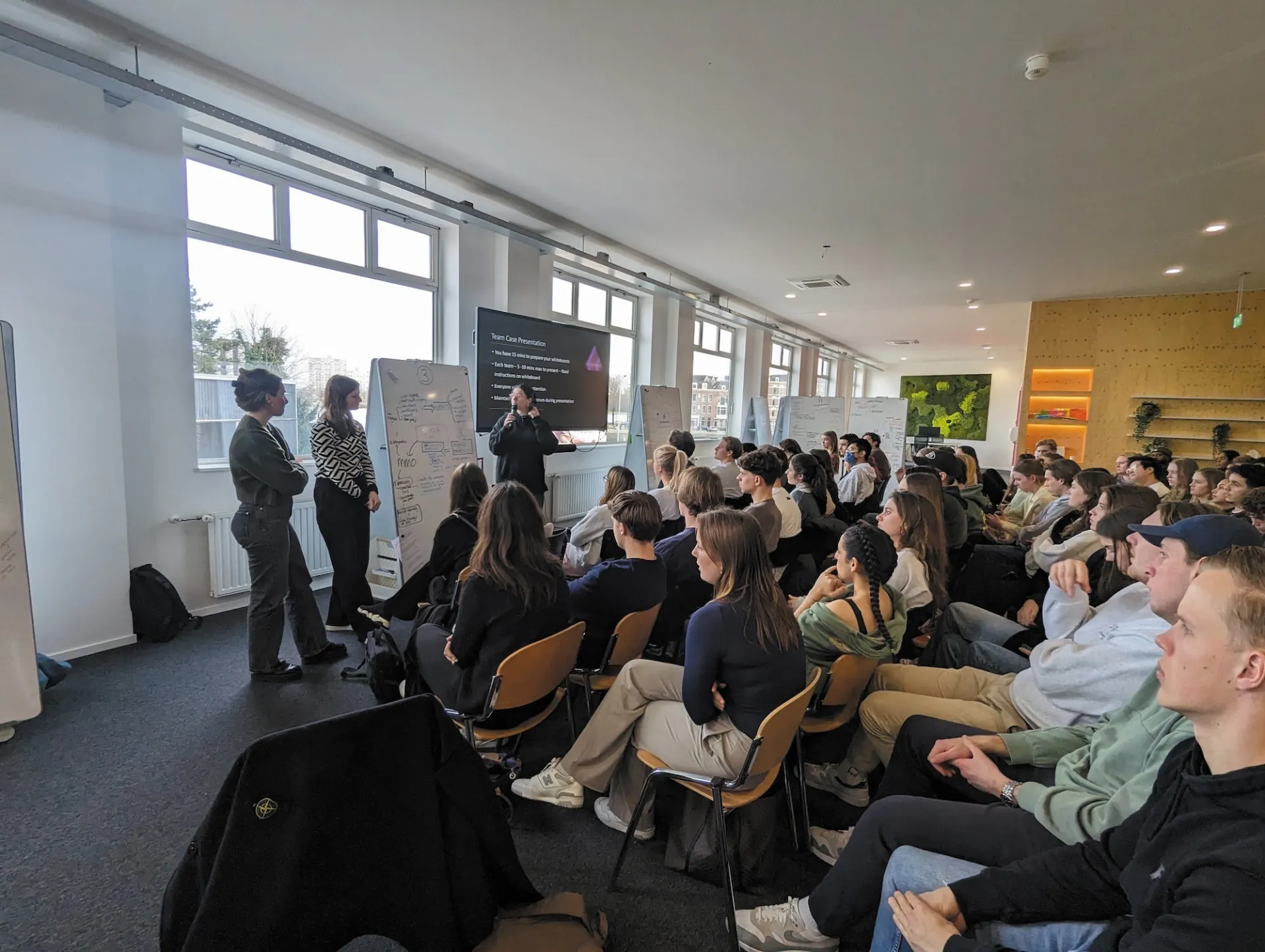
Upon joining RSM, Dr Chintan Kella was tasked with designing a new bachelor’s elective course. This opportunity allowed him to combine his HR knowledge and expertise in working with businesses, with his commitment to positive societal change. He developed the course ‘Diversity, Inclusion, and Future of Work’ with the goal of providing students with both theoretical understanding and practical hands-on experience of how to tackle lack of inclusion and diversity in the workplace. A further aim was to equip students who will become future managers and leaders – and colleagues – with the skills that enable and contribute to an environment where diversity is celebrated and used positively.
The course highlights the importance and benefits of inclusion and diversity in the workplace. Bringing different voices and perspectives to creatively solve issues was important to Kella, thus he structured the course around internal and external collaborations. With the help of IatC and EV, the programme partnered with ten diverse organisations such as consulting firm Capgemini, the municipality of Rotterdam and VluchtlingenWerk (Dutch Council for Refugees), an organisation working with status holders. After a panel discussion on the actions and challenges related to diversity and inclusion of these organisations, students were given the assignment to understand, map, and capture the organisations’ real-life challenges and dilemmas, while also providing the organisations with fresh insights and unique solutions on diversity and inclusion.
Practical experiences for more inclusive workplaces
Students gained a deep understanding of the complexities surrounding diversity and inclusion, including how to recognise and confront biases in the systemic nature of discrimination. The hands-on collaboration gave practical experiences and insights that typical classroom settings frequently lack, allowing them to create inclusive solutions that could be implemented in a variety of circumstances. Kella reflects on the course:
The message I really wanted to convey - and that students have hopefully gained - is a new perspective of looking at things: how they approach society at large, how they approach their work, and how they approach people around them, whether in their personal lives as friends or as colleagues, but also in their future workplaces.
Kella also believes that it is important to recognise and act inclusively with students who may be neurodivergent and have related needs, such as students with ADHD. He therefore wanted to create an alternative assessment process that provides everyone a fair chance to demonstrate their knowledge and sharpen their strengths. The assessment process for the elective offered students options to convey their knowledge, such as designing a poster, recording a podcast, or producing a short film. Students also had journals in which they recorded weekly reflections on the course.
At the end of the course, they submit a journal to me with seven weeks of reflection and based on these weekly reflections, they write the main report. I was not expecting and hence was impressed by the kind of creativity and effort of the students.
Kella is excited for what the future holds, as he prepares for the second run of the course beginning in 2025. Over the summer he is working closely with IatC team to further align the course based on the experience and feedback from the first cohort. Moving forward he intends to capitalise on all the information from the course by compiling it into a detailed workbook that guides students and organisations along a structured pathway to address problems within companies through different options and action plans.
A Climate Just City of Rotterdam
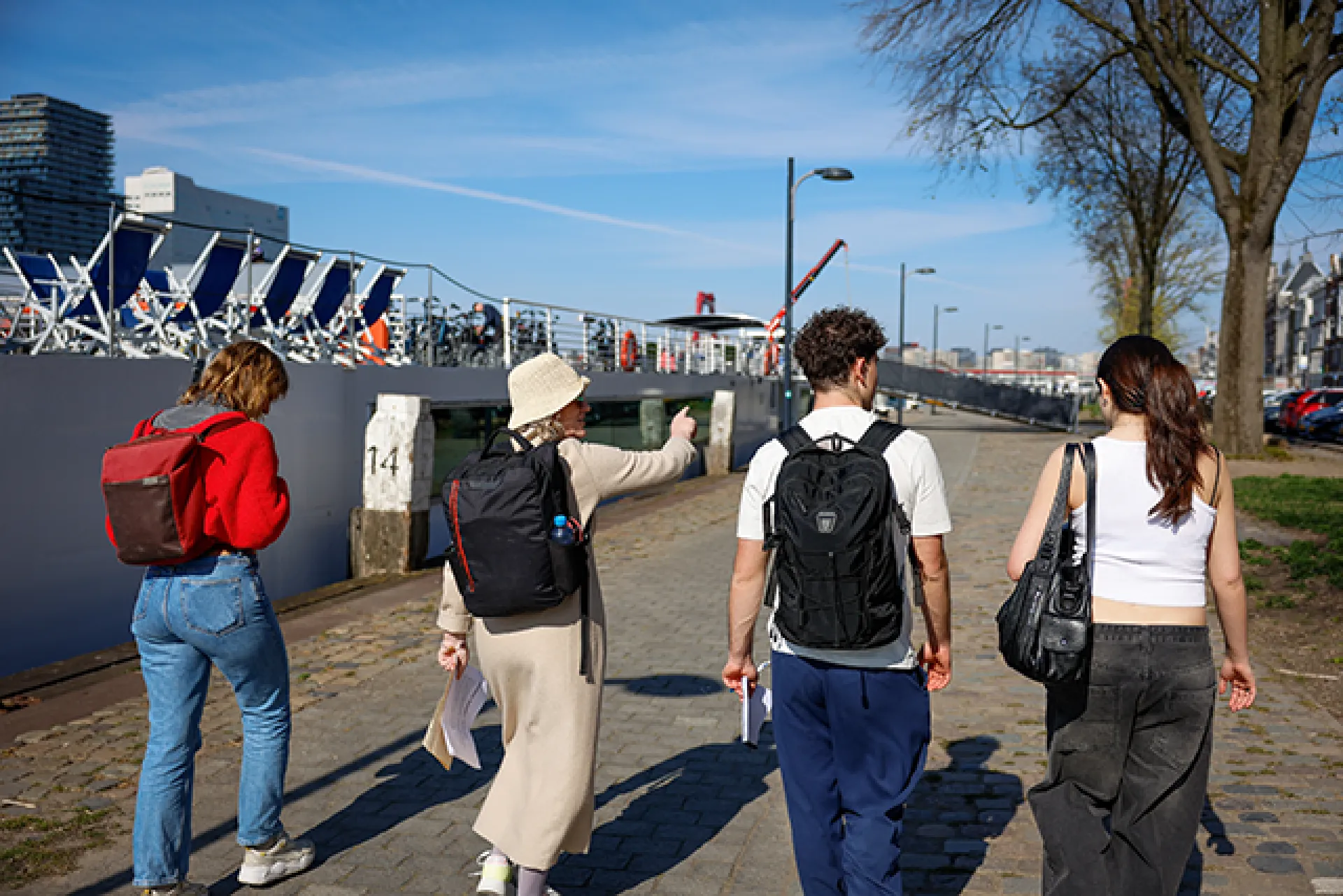
In efforts to fight climate change, our society is embarking on a digital and green transition. Cities around the world are implementing policies and regulations for solutions that are sustainable and just. However, the idea of what “just transition” means is different across disciplines. Two educational innovations illustrate how legal scholarship can help align theory and practice in a climate-just city. Dr. Alberto Quintavalla and Renée Knoop have turned the master’s course ‘Perspectives on Sustainability’ into a living lab, enabling students to translate regulatory theory into concrete policy advice for the municipality. In the other, Dr. Siobhán Airey’s ‘Just Transition Walk’, developed in partnership with community NGO Iedereen aan Boord (EN: Everyone on Board; Non-Governmental Organisation), invites students and local stakeholders to explore Noordereiland’s streets, where water management, energy use, and community governance intersect. These projects demonstrate how practice-based learning can inform more effective and equitable climate policies for Rotterdam.
Policy insights from students’ experiences
In the educational arena, Dr. Alberto Quintavalla and Renée Knoop LL.M. (PhD candidate at ESL) incorporated real-life Rotterdam issues provided by the municipality into the course ‘Perspectives on Sustainability’ offered within the master of Publiekrecht voor Bedrijf en Burger (Public Law for Business and Citizen). In the course, students address issues of sustainability and just transition from a regulatory perspective.
Quintavalla explains: 'It is important to connect the theoretical ideas and underpinnings of the term “sustainable development” and sustainability-related issues with more practical aspects’.
This does not just smooth the way for students’ transitions into the working world post-programme; it also allows them to ‘see, fully capture, and understand what sustainability issues mean in practice’. The insights gained by the students have been translated into policy advice for the municipality. For Quintavalla, such cooperation with societal partners is vital to creating positive societal impact as it ‘enables a better synergy toward achieving a common objective and fully utilising each other’s potentials’. Moreover, to create effective impact through policies, ‘you need a societal actor to translate your research into practice’.
Similarly, support from colleagues and partners was instrumental. For the course development, Quintavalla and Knoop received practical support from professional services staff, and IatC connected them with the municipality. The master’s coordinator from ESL, Prof. Leonie Reins, was very supportive and trusting of the project – this is key to set up partnerships, which require time and effort.
Would you like to engage in similar work? Quintavalla advises:
The most important thing is to talk and discuss things with an open mind with other colleagues. Try to explore what is happening within and outside of EUR. Try to be intellectually curious and flexible to see how to engage, interact and reshape your own (teaching or research) agenda. At the same time, it is important to have quite a lot of patience, because certain things require time, and you have to deal with all the different administrative issues you are confronted with.
Luckily, Quintavalla also found that ‘there are many people interested in what you are doing, and they often have an interest in cooperating with you.’ Lastly, it is important to go with the unexpected turns a project may take because ‘sometimes things are unfolding in a way that you may not necessarily expect, but they open up new possibilities and opportunities’.
> Would you like to learn more? Contact Dr Alberto Quintavalla via quintavalla@law.eur.nl.
Towards a Just Transition: Walking-Learning Law
As society contends with climate change and shifts toward a more sustainable and equitable future, law and governance play crucial roles. Yet the legal and governance pathways to a ‘Just Transition’ remain fragmented, unclear, and top-down. ‘Might the law and governance of ‘Just Transition’ make more sense from a bottom-up, community- and location-centred perspective?’ asks Dr. Siobhán Airey (ESL). It turns out – it does.
Collaborating with the community-led NGO Iedereen aan Boord (IAB) on Rotterdam’s Noordereiland and drawing from the experiences shared by IAB’s ‘captain’ Ellen van Bodegom, led to a jointly-produced ‘Just Transition Walk.’ The Walk highlights six key dimensions of Just Transition law and governance relevant to the island’s residents, including in water management and energy use, sustainable economic development, and community participation in governance.
Insights from this project are now shared beyond the island, with both EUR students and external stakeholders. ‘We have done the Walk several times now with representatives from the Municipality, the Province and others. Walking is a unique way to experience the problems and challenges on Climate Justice, and to work on ways to address these in a collaborative way.’ says Ellen.
At ESL, Airey has integrated the Walk into the master of Publiekrecht voor Bedrijf en Burger, specifically the Legal Research and Writing Skills course. Airey explains:
Students not only gain real insight into what a Just Transition looks like in practice, but they also experience how different bodies of public law intersect, highlighting real life challenges faced by legal professionals and communities.
She also notes how the physical context of the Walk enhances student learning experience, especially in collaborative and critical thinking: ‘Students are more open and reflective when we’re standing at a street corner.’ For many, it has become a standout part of the course — ‘Several students asked that the Walk be the first class of the next academic year!’
This project had excellent research assistance from ESL students Daan Albers, Renée Knoop, and Jonah Mulder. It received funding from a UNIC Seed Fund Grant, EUR’s Lustruum Fund (with Dr. Alberto Quintavalla as co-applicant), and was conducted in collaboration with Erasmus X.
> Would you like to learn more? Contact Dr Siobhán Airey via airey@law.eur.nl
Redefining student excellence
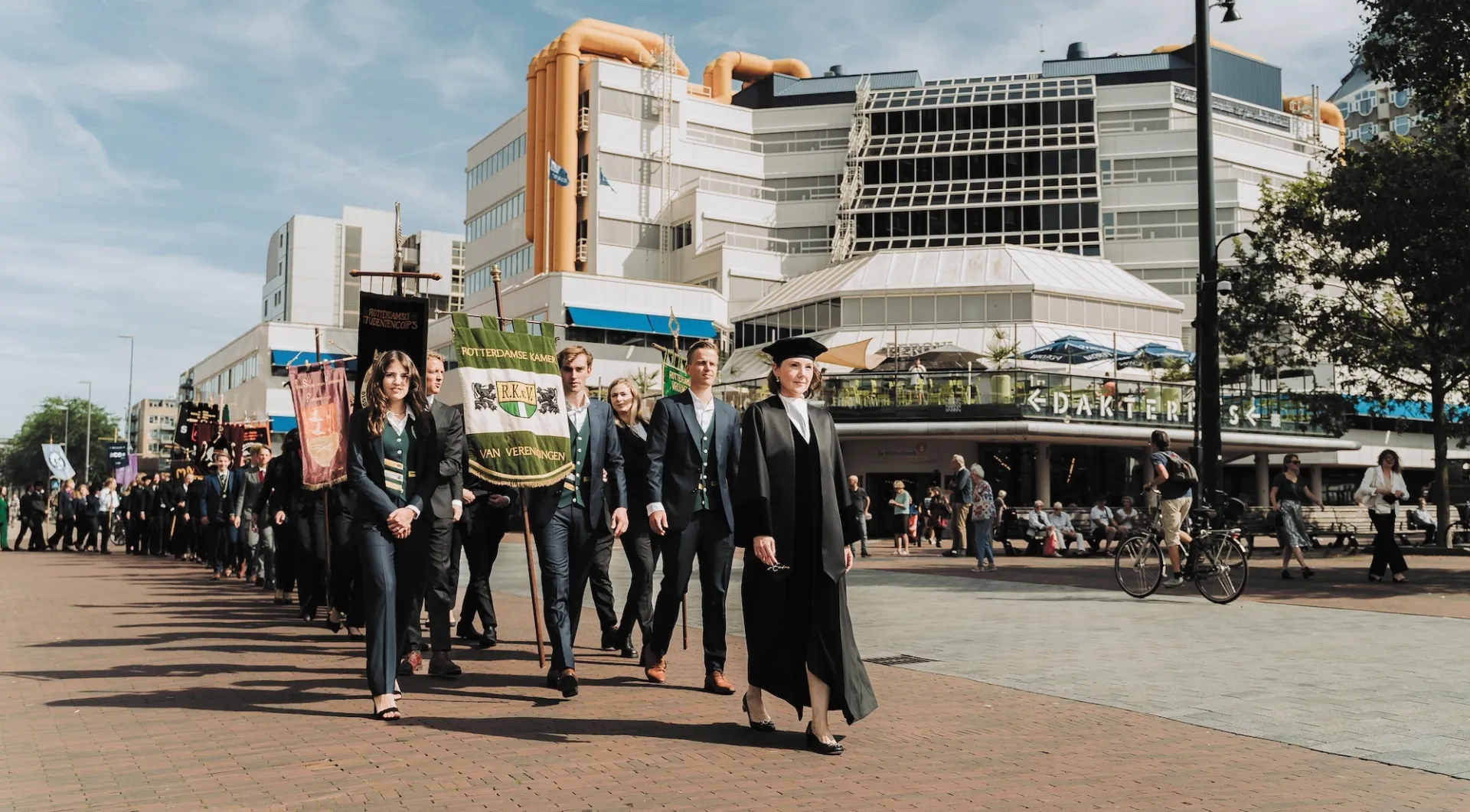
In line with our ambition to equip our students with impact capacity, we are also reconceptualising the kind of ‘student excellence’ we want to encourage. We do not want our students to strive only for excellence in their grades, but also in their positive societal impact. This is exemplified through several of our extracurricular and honours programmes, which are aimed at fostering our students’ impact capacity. Acceptance to these programmes is based on students’ motivation and not just their grades. This creates opportunities for all students, thereby contributing to our efforts to become an inclusive and impact-driven university. Some examples of these initiatives are:

Redefining Honours Programme into Engaged Citizens Programme
Erasmus University College’s (EUC) honours programme has undergone substantial impact-driven revisions in the past years. Dr Anastasia Moiseeva, a coordinator of the Extracurricular Honours Programme at EUC, has worked to transform EUC’s former ‘Leadership Honours Programme’ into the ‘Engaged Citizens Programme (ECP)’ it is today. This new one-year honours programme focuses on the broad concept of well-being and environmental sustainability. The ECP is meant for all first and second-year EUC students. Application to the ECP happens via a short video in which students introduce themselves and share their personal motivation, enabling the programme coordinators to see in a direct way a student’s excitement about the ECP. It is precisely this enthusiasm that can lead to positive societal impact.
The goal of this interdisciplinary programme is to help students see how personal context, community engagement, and world perspective are intertwined. Students are exposed to various aspects of well-being and sustainability from different angles and levels by participating in Urban Ecology Projects across Rotterdam. The holistic learning experience allows students to acquire knowledge cumulatively and develop professional skills while positively impacting their community.
Many EUC colleagues actively supported these changes by assisting Moiseeva in providing a masterclass on their own specialty. The leadership of EUC provided support for this impact-driven programme revision; not only financially, but also by conveying their trust in the programme and offering support for the projects devised by students. Also instrumental to the revision of the honours programme was the enthusiasm and receptiveness of the societal partners. Their masterclasses facilitated student engagement and inspired the projects. Students who have participated in the programme were key to its success. Even though Moiseeva offered programme participants her network, and that of EV, she was proud to see how the students established and managed their stakeholder relationships independently:
In the end I always come to the idea of giving students freedom, so they experience autonomy. Students fully drive these relationships. They learn by doing it themselves. It’s not about failure, it’s about the process: what did you learn?
Student Akshaj Nair shares their perspective:
The Engaged Citizens Programme allowed me to connect the theories and topics that we learned across the different departments and adopt an interdisciplinary approach towards addressing the problems around us. I personally found the masterclasses on sustainable nutrition and the art of storytelling to be very interesting and useful in my personal development. I would definitely recommend students to apply to this programme!
As EUC continues to learn from the feedback on the Engaged Citizens Programme, they continue to improve and develop it further. The programme will continue in a similar form for the coming academic year of 2024-2025.
Introduction of Global Business & Sustainability Positive Impact Agent track
RSM introduced the Global Business & Sustainability (GBS) Positive Impact Agent track in its effort to redefine student excellence This voluntary, extracurricular track was specifically designed to enable GBS students to reflect on their journey to becoming positive impact agents, thus allowing for deeper, transformative learning. So far 46 students have completed the track, setting personal goals and reflecting on their team processes, personal development, career aspirations and learnings regarding business sustainability, finding their own definition of what becoming an impact agent means for each of them. According to students’ self-reporting, activities in the track fuelled their motivation further and allowed for further personal development. At completion students received a personal reference letter that—in some cases—opened up otherwise unavailable career paths.
Forging learning communities
Connecting with external partners is essential for high-quality impact-driven education. EUR invests in forging learning communities by investing in long-term relationships through, for example, several School-level initiatives, and specifically through IatC’s knowledge brokers. Together with EV, the knowledge brokers have built structural relationships with societal partners, thus helping teachers find the right stakeholders to participate in specific educational initiatives and enabling societal partners to benefit from these initiatives. Further, they aim to invest in long-term relationships in Rotterdam communities and across specific thematic networks, forming learning communities.
Through these learning communities, EUR aims to enable students, teachers and stakeholders to collaborate on societal challenges. By collaborating and co-creating, we learn about and help move societal challenges forward. Concrete examples of forging learning communities through our long-term relationships include:
Werkplaats Crooswijk: localising impact
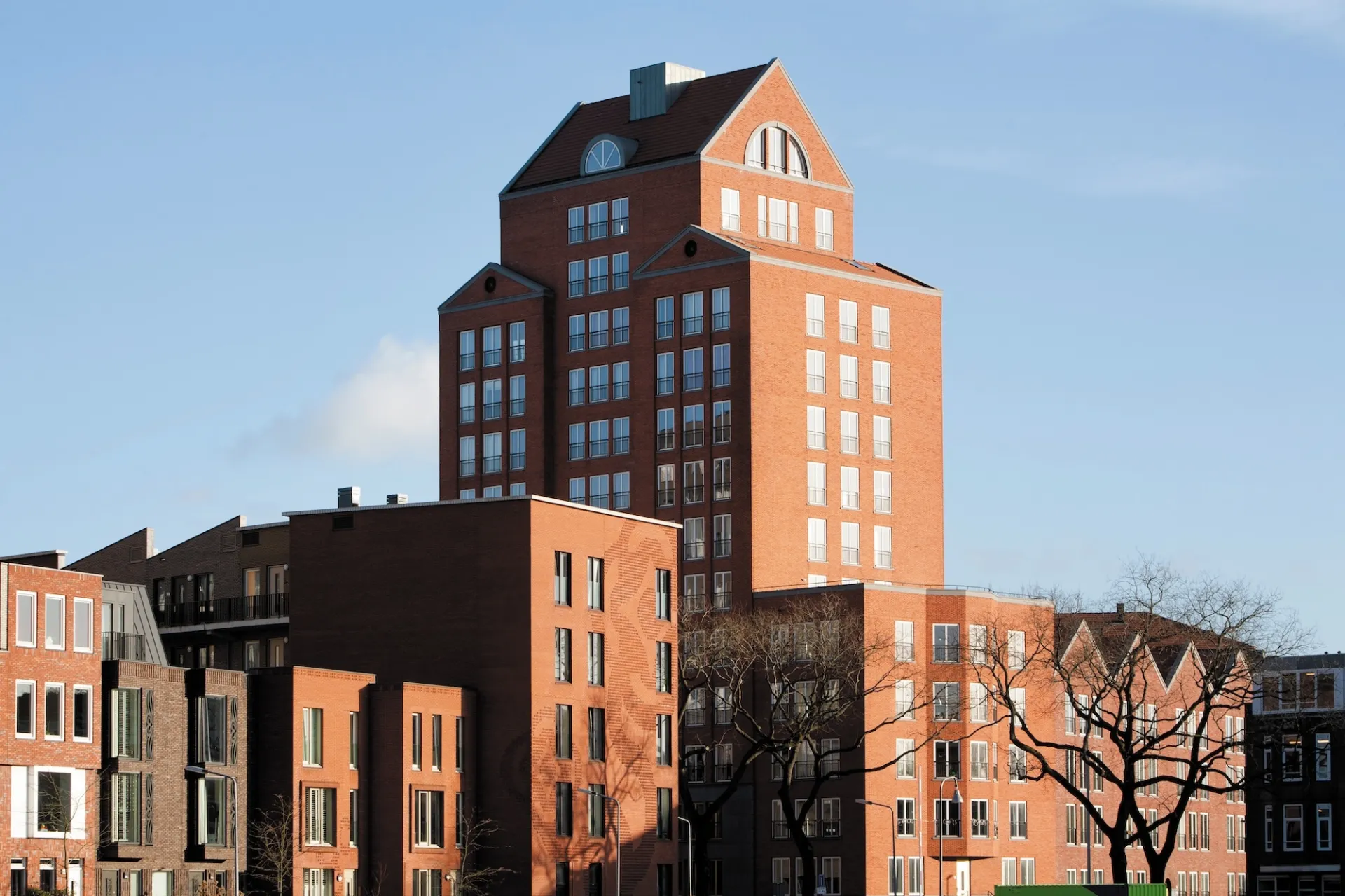
What does a neighbourhood-oriented approach to stakeholder management look like in practice? One example is IatC’s ‘Werkplaats Crooswijk’ (EN: Crooswijk Workshop; Crooswijk is a part of Rotterdam municipality). This project was launched in 2023 for students to work together with Crooswijk residents on the challenges their community faces. By working directly with and for the people and organisations of Crooswijk, the project fosters genuine interaction and responsiveness to the community’s needs. Existing relationships with local government officials and ESSB’s Department of Public Administration and Sociology have facilitated a swift start to these community-driven efforts.
Despite being operational for less than one year, Werkplaats Crooswijk has already made significant strides—both in Crooswijk and the university. The initiative began with finding stakeholders and compiling a list of community urgencies identified by them. André Hendrikse MSc (knowledge broker) and Lisette Ligtendag MSc (learning innovator) from IatC, are some of the initiators of ‘Werkplaats Crooswijk’. Ligtendag explains: ‘The idea is to work together with Crooswijk—and I mean really together—to further improve the neighbourhood’.The Werkplaats is striving to become a recognised part of various local networks, with increasing familiarity among Crooswijk’s community of organisations and residents. A significant step to improve visibility within the university was a neighbourhood walk with vice-deans of various Schools. During the walk, local issues were highlighted and linked to relevant academic fields, illustrating the potential for university professionals to engage meaningfully with community issues.
However, translating these urgencies into actionable academic projects for courses and student theses has proven challenging, requiring patience and incremental steps. Ligtendag: ‘There are actually three elements between which you have to constantly work to find a connection: (1) the neighbourhood—and we actually want to put that at the centre; (2) the student and their learning process; and (3) the university’. Considering and aligning the needs of all three is a big task, Ligtendag explains:
It is not enough to just pick up a request from the neighbourhood. There also needs to be a teacher somewhere who says: ‘hey, I want to contribute to that with my students!’. And you need the students to be enthusiastic to fully commit to this collaboration. And that triad, to get those moving well together, is one of the biggest challenges.
Advancing trusted connections
Werkplaats Crooswijk has initiated two pilot projects to foster this integration: a bachelor’s thesis trajectory and a second-year bachelor’s course focused on interview skills. So far, these integrations show that involving organisations in framing these assignments energises both the community stakeholders and participating students. This mutual enthusiasm is vital, although the project acknowledges the need for ongoing effort to secure committed engagement from stakeholders beyond initial discussions.
Werkplaats Crooswijk is increasing students’ impact capacity. This includes experimenting with the role of a learning coach to better guide students with inspiration drawn from the Inner Development Goals to structure these coaching trajectories. The initiative is also exploring ways to connect with habitually excluded or under-reached community members to ensure the benefits of their work extend to all residents of Crooswijk. This involves leveraging the (often tacit) knowledge of these individuals, aiming to enrich both research and educational outcomes through closer integration. Furthermore, Werkplaats Crooswijk is striving to gain a deeper understanding of the broader challenges within the neighbourhood, moving beyond the initial issues identified by stakeholders. The goal is to establish more sustained and meaningful collaborations that address the core needs of Crooswijk, fostering lasting cooperation and community development. Establishing this takes time. Ligtendag: ‘We also thought it could be done faster, but that is simply not possible. This is especially difficult to see for those who are indirectly involved but very enthusiastic’. Therefore, it is essential to manage expectations both within the university and the neighbourhood.
The aim of all Werkplaats Crooswijk’s efforts is to establish a sustained presence in the neighbourhood, beyond the typical short-term, project-based approach of universities that often concludes after project completion. Establishing and maintaining trust is central to this endeavour, as the success of the initiative depends on mutual effort and engagement from both university participants and community members. Continuity is essential. IatC is currently working on creating educational blueprints for various types of assignments. This way, the lessons learned from Werkplaats Crooswijk can be adopted and translated to other neighbourhoods in the city (and beyond).
The Inner Development Goals (IDGs) are a non-profit initiative aimed at fostering the inner skills and qualities necessary to effectively address complex global challenges and promote sustainable development, complementing the UN's 2015 Sustainable Development Goals (SDG’s).
Initiating account manager impact education
Erasmus School of Health Policy & Management (ESHPM) aims to prepare their students to make a positive contribution to healthcare in their professional career by linking them with healthcare practices throughout their education. To better facilitate this, ESHPM has initiated a new position: Account Manager Impact Education. The objective of this position is to expand, improve, solidify, and create more value with ESHPM’s relations with healthcare organisations. In the past these relations were very specific in terms of their function (internship, graduation, guest lecture) and were not managed centrally but by individual teachers. With the Account Manager position, ESHPM is working to facilitate more continuous and mutually beneficial reciprocal relationships. This new approach allows ESHPM to organise their relations with healthcare organisations more strategically, expand relations within students’ future fields of work, and make more impact through education. The position has recently been filled by Hakan Abali, who is working to better structure ESHPM’s connections with healthcare practice and policy organisations and match students to organisations throughout their programme. An anticipated impact of the account manager initiative is that it will intensify the dialogue with healthcare practice about future needs, both in terms of research and (executive and initial) education activities.
Learning for Equality
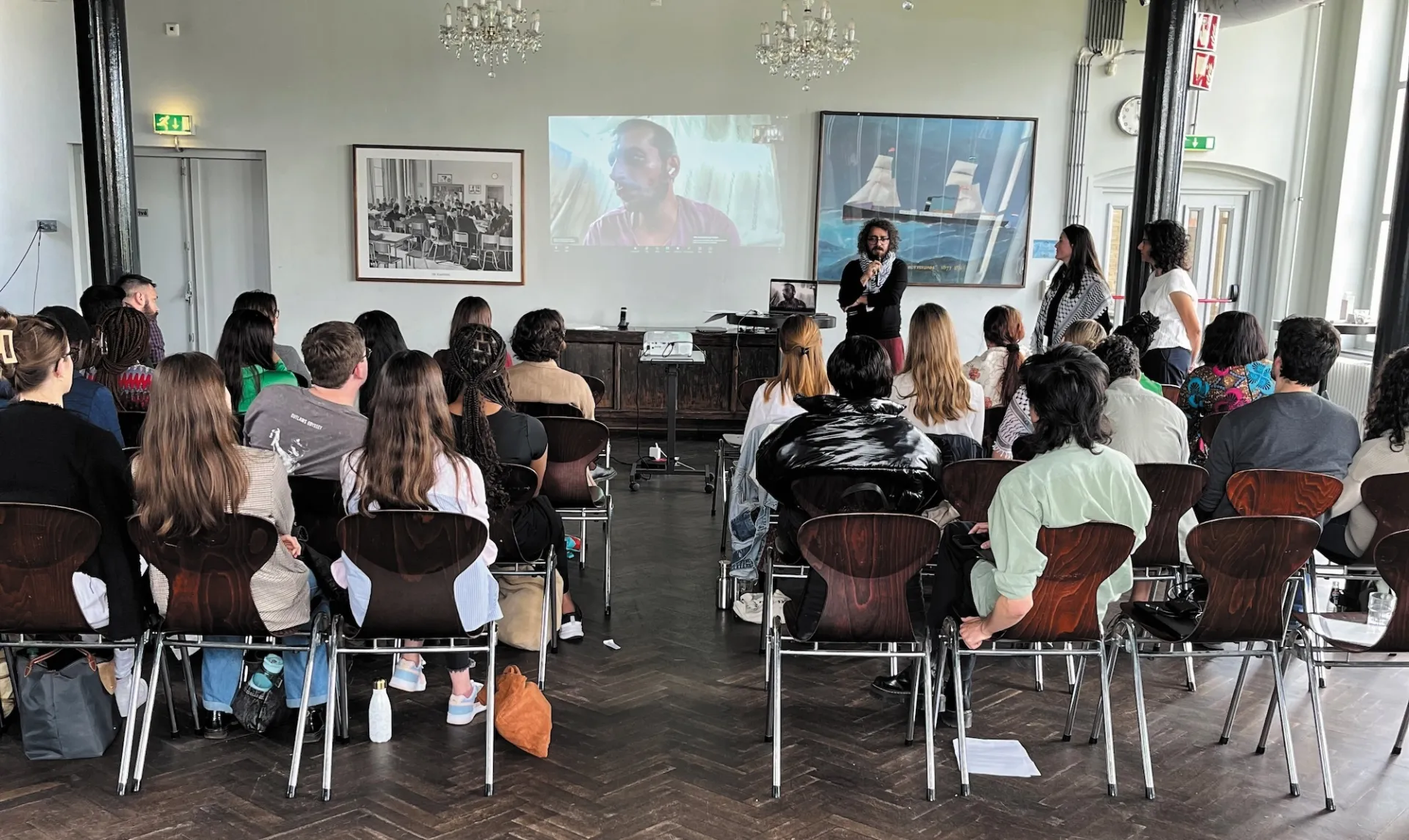
Across EUR, students get the chance to learn and create valuable knowledge about social inequalities and efforts to fight them. With support from the Erasmus Initiative Vital Cities and Citizens (VCC) and CLI, Dr Isabel Awad of Erasmus School of History, Culture and Communication (ESHCC) developed a project, called Learning for Equality, to showcase this knowledge via a website and a yearly student symposium. The two main objectives are to facilitate interdisciplinary learning and community-building among EUR students and lecturers interested in social inclusion and to showcase and further inspire EUR’s attention and efforts to make Rotterdam a more just city. Awad shares: 'The creativity and enthusiasm of the young students and alumni I have worked with led to an especially attractive website that combines insightful coursework and theses with wonderful illustrations by students from Willem de Kooning Academy’. Getting people to engage with each other based solely on online content proved challenging, so they decided to organise a live event to bring this community together. This event became the Connected Learning Symposium.
Building a community, building solidarity
The symposium became a unique opportunity for students to discuss their experiences and learnings on social inequality through panel presentations. The participants valued this opportunity, as shown by an Erasmus Magazine article from that first year. This enthusiasm motivated Awad to continue:
Organising such an event is always challenging, but seeing people happy, sharing their great work, learning from each other, and forming a community is worth it. Already the titles of the submissions suggest their amazing quality and when shared across disciplines, students’ work becomes even more interesting.
This year, in the third Connected Learning Symposium, students from ESSB, ISS, IHS, EHSCC, ESPhil, ESL, and EUC discussed topics like disabilities and accessibility, urban livelihoods, feminist resistance, and voices of change in academia. In the future, Awad hopes to also include students and alumni from the four remaining Schools (ESE, ESHPM, EMC, and RSM).
‘The symposium contributes to a sense of solidarity such that people do not feel alone in their interests and are more inspired in pursuing them. This year, there was quite a lot about Palestine, and I think it was a special environment in that sense. There was a space for this shared feeling or pain. I think many people appreciated that’, Awad remembers.'You could see how these connections opened the agenda to new issues and approaches’. Bringing people together fosters this: ‘Some students at Campus Woudestein had never met anyone from the campus in The Hague and vice versa’, Awad explains.
I trust that the sense of community, the new connections and the motivations to pursue these kinds of interests can translate into a more responsible engagement with our common urban environment, specifically in Rotterdam and The Hague.
A shared excitement
Including different Schools and a variety of people is also what is most challenging about this initiative. Awad: ‘People’s time is precious, so getting people’s attention and getting them to participate in the symposium or to contribute work to our website is not easy’. To achieve and even exceed the project’s ambitions, Awad found teamwork invaluable. She advises others engaging in similar work to ‘collaborate with young and motivated people and encourage them to develop their own ideas. They help us to get out of our fixed ideas of how things are and should be. We should be humble about it. It is not like you open a call and everyone submits stuff’.
Regarding the project’s main lesson, Awad shares:
But I think the main lesson of this project is the importance for many students in this university to have more opportunities to share their interests, their concerns, their pains, and their hopes with like-minded students in an interdisciplinary setting. I am always impressed by the enthusiasm of participants and their interactions. The lecturers who have joined are also impressed by what happens at the symposium. I think that that is very telling, and I think we need much more of this.
For the future, the aim is to create more of a shared ownership across different Schools to ensure that the initiative is sustainable and can extend its positive impact.
> Would you like to contribute to or learn more about this project? Contact Dr Isabel Awad via awad@eshcc.eur.nl
Engaged students for inclusive cities
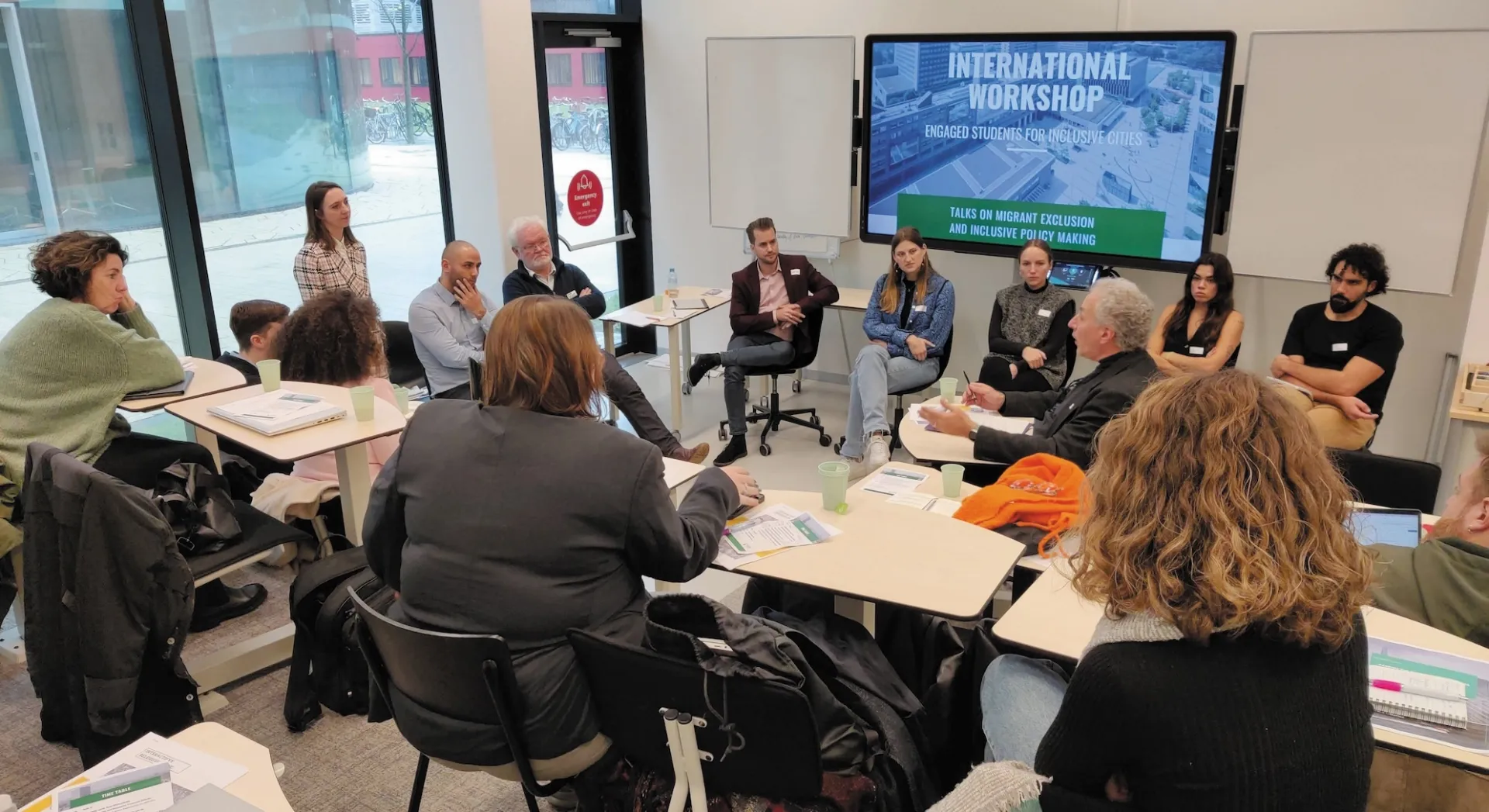
To facilitate dialogue between academics and practitioners on challenges related to migration and diversity governance in post-industrial cities, the ‘Engaged Students for Inclusive Cities’ international workshop took place on December 12, 2023 in Rotterdam. The workshop brought together students and academics from EUR and the University of Liège (ULiège) along with representatives from the Rotterdam municipality and the anti-discrimination agency RADAR to foster knowledge sharing on migrant inclusion between academia and practice.
The workshop was led by Dr Asya Pisarevskaya, working at ESSB and lead of the Governance of Migration and Diversity (GMD) master’s programme which is part of the Leiden-Delft-Erasmus University alliance (LDE), who received seed funding from UNIC4ER (European University of Post-Industrial Cities for Engaged Research) to make this possible. Moreover, EUR joined forces with University of Liège, which is also part of the European University Alliance UNIC. Pisarevskaya mentions that this partnership ‘allows us to come out of our own bubble and hear other ideas and perspectives from researchers and students that are based in another country - we are bringing diverse perspectives together and getting inspired from each other’.
The day began with presentations by students of the GMD programme who shared their learnings with decision-makers in the field.
For students, it was a rewarding experience because it ensured that their work did not just stay in computers or a thesis repository, but it was being heard by actors that can actually use their research to improve policy.
Pisarevskaya explains. To ensure that presentations successfully communicated research findings in a way that appeals to practitioners, Pisarevskaya guided students on how they could move beyond conversations about theory to more accessible and practical discussions on what the research means for decision-makers and society at large.
Making room for reflection
Afterwards, there was a roundtable discussion about the opportunities and challenges surrounding engaged research practices. Huub Beijers, senior researcher at RADAR, mentions during a video that conveys the key takeaways and recommendations from the workshop: ‘One of the lessons from this afternoon is that we won’t get there with one-time objectives. We need to engage in long-term commitment or long-term involvement with each other’. As such, to reach state actors and grassroot organisations for research purposes, academics must also build reciprocal, trusting, and lasting relationships with societal partners.
Pisarevskaya highlights that students were not the only ones who benefitted from this workshop. Instead, she was pleased to hear that the municipal and societal representatives expressed the need for such learning and reflection moments, as they felt inspired from the ideas coming from the university to address challenges in migration and diversity governance.
Pisarevskaya hopes that this example represents an initial step towards more successful collaborations and engagement practices between the university and society, and she is looking forward to future knowledge-sharing events that will arise after the agreement signed on May 27th of 2024 between EUR, the City of Rotterdam and the anti-discrimination agency RADAR for a long-term collaboration on research into discrimination, racism and inequality in Rotterdam.
Fostering interdisciplinary education
To foster transformative change and transdisciplinary learning, it is vital to be able to learn from our own, as well as others’, experiences. By experimenting with new approaches to teaching, learning, and administrative processes in education, our University can better prepare students for the future, address complex societal challenges, and remain responsive to the evolving needs of our stakeholders and the broader society. To foster this open and vital educational environment, several initiatives have initiated the development and implementation of transdisciplinary education including:

Creating space for interdisciplinary transformative learning
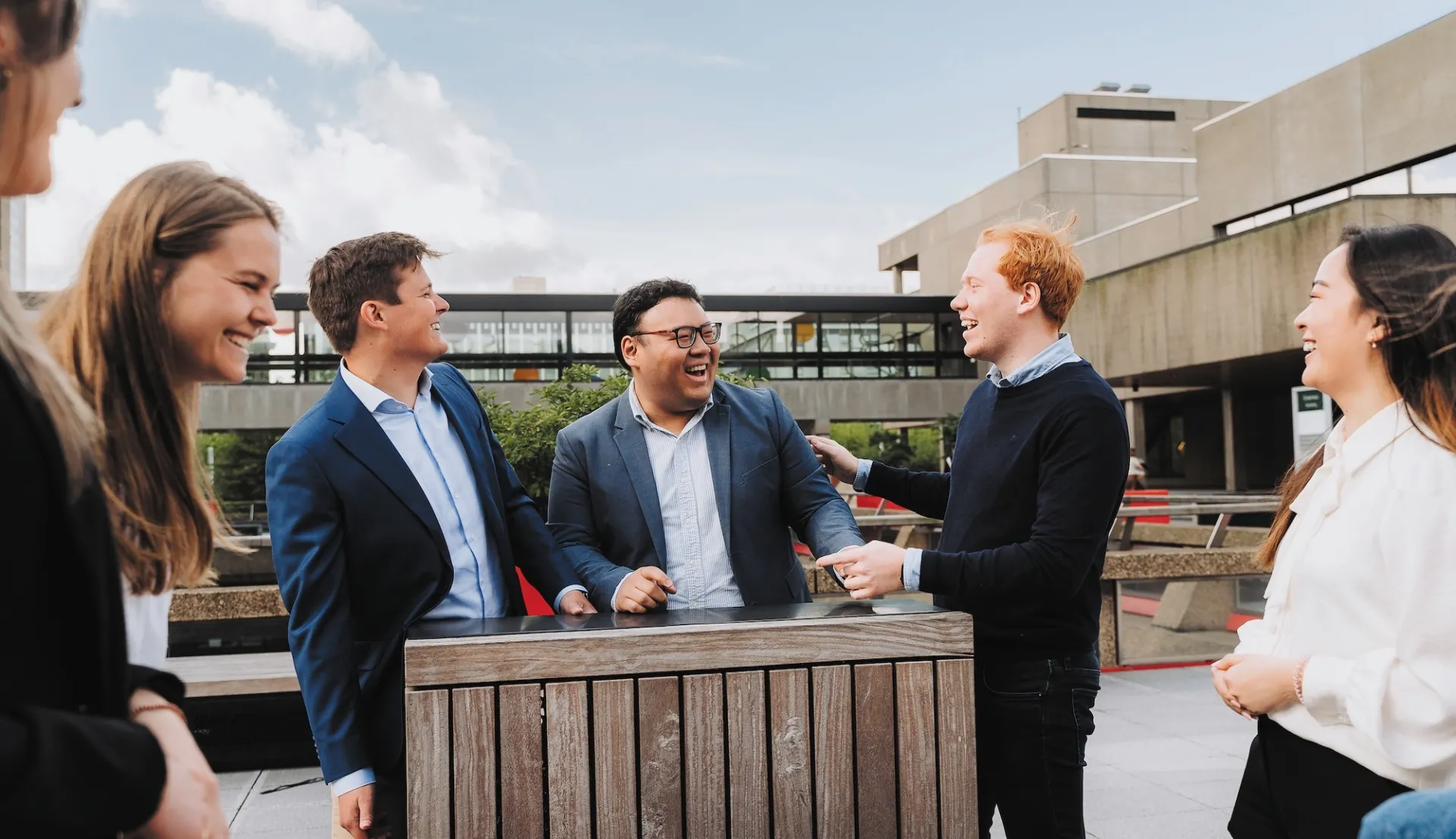
To foster transformative change and transdisciplinary learning, it is vital to be able to learn from our own as well as others’ experiences. By experimenting with new approaches to teaching, learning, and administrative processes, universities can better prepare students for the future, address complex societal challenges, and remain responsive to the evolving needs of our stakeholders and the broader society. The Design Impact Transition platform (DIT) fosters such learning by identifying as an institutional experiment. Using an action research methodology, the ambition is to learn about what is required for institutional change at EUR. The team strives to change certain forces and structures to be more conducive to transformative ways of doing research and education. They use a reflexive monitoring approach, which combines workshops, interviews, and reflection sessions as part of the methodology, meaning they evaluate DIT to learn from successes and failures, inform decision-making, and drive continuous improvement.
Further, in response to a need for connection revealed by feedback from among other sources, the PhD course ‘Introduction to action-oriented research for social change’, designed by Dr Julia Wittmayer, DIT is working to implement an early career researcher study group on action-oriented research, in which early career researchers at EUR (and beyond) are connected in a peer learning conversation. The aim is to create an informal safe space for learning together about doing research that is engaged, action-oriented or transdisciplinary, and links closely with societal challenges.
Creating these spaces for inter- and transdisciplinary learning has taught us that sharing experiences, struggles, and new ideas fosters lasting networks across Schools and even beyond EUR. Embracing the value of informal connections and creating space for the small conversations proved vital in furthering transformative change. Moreover, the team has learned from these various communities about what influences the ways that they can do transformative academic work and how they do it (see e.g., Kump et al., 2023 and Loorbach & Wittmayer, 2023) and has shared this knowledge with university leadership and staff (e.g., via policy brief). Creating the space to share learnings has also showed us that while there is already much talk about transdisciplinarity, impact, and societal challenges, we are still a long way from having transformative academic work mainstreamed as a viable institutional pathway.
As one of the strategic initiatives of EUR’s Strategy 2024, DIT (the Design Impact and Transition platform) is tasked with creating favourable environments for more transformative academic work. DIT aims to bring together academics, students, professional services staff, and external stakeholders around complex and persistent societal challenges.
Master Programme ‘Societal Transitions’
Facilitating and managing societal transition requires us to experiment, initiate, and transform the status quo. To do so, we need to acquire skills and knowledge that transcend disciplinary boundaries to enable us to synthesise and draw connections between multiple perspectives. The new transdisciplinary Master Programme ‘Societal Transitions’ aims to cultivate and equip future transformative leaders to do exactly that. Developed by academics from several Schools (ESPhil, ESSB, RSM, ISS) and institutes (DRIFT and IHS), executed by DIT and hosted by Erasmus School of Philosophy (ESPhil), this master is based on interdisciplinary knowledge and the development of key sustainability competencies for students. This transdisciplinary master equips students with the knowledge and skills necessary to understand, interpret and work on complex societal transitions, integrating knowledge from various disciplines—including philosophy, ecology, and law—and practice. It focusses particularly on the socio-economic and institutional dimensions of societal transitions. And since no one can address today’s challenges alone, students collaborate with other professionals (peers, teachers, researchers, and societal stakeholders) to co-create interventions for a just and sustainable society. This way, they move beyond theory and apply their learnings in a real-life context.
Although the programme has just started, and therefore not yet evaluated, there are some initial learnings to share from its first year. Firstly, inter- and transdisciplinary education requires an interdisciplinary way of developing, managing, and governing educational programmes. While current structures often prevent such collaboration, ESPhil found that cooperation both with DIT and across EUR Schools provides a format for further development of interdisciplinary educational programmes and for the potential inclusion of further tracks within the programme. For this format, cooperation with lecturers from other Schools as well as with external stakeholders is important. Depending on financial guarantees, the continuation of the Transdisciplinary Master may be developed as part of ESPhil’s contribution to a School of Convergence (read more in Part III, Convergence).
Enriching the learning environment
Not only does EUR aim to positively impact the Rotterdam area by investing in relationships, but we also invest in the learning environment within the Rotterdam area. Through inspiring physical spaces in the city, relationships and collaborations can flourish, and education becomes more accessible and embedded within society. The HefHouse is a great example of this.
HefHouse: Redefining the classroom
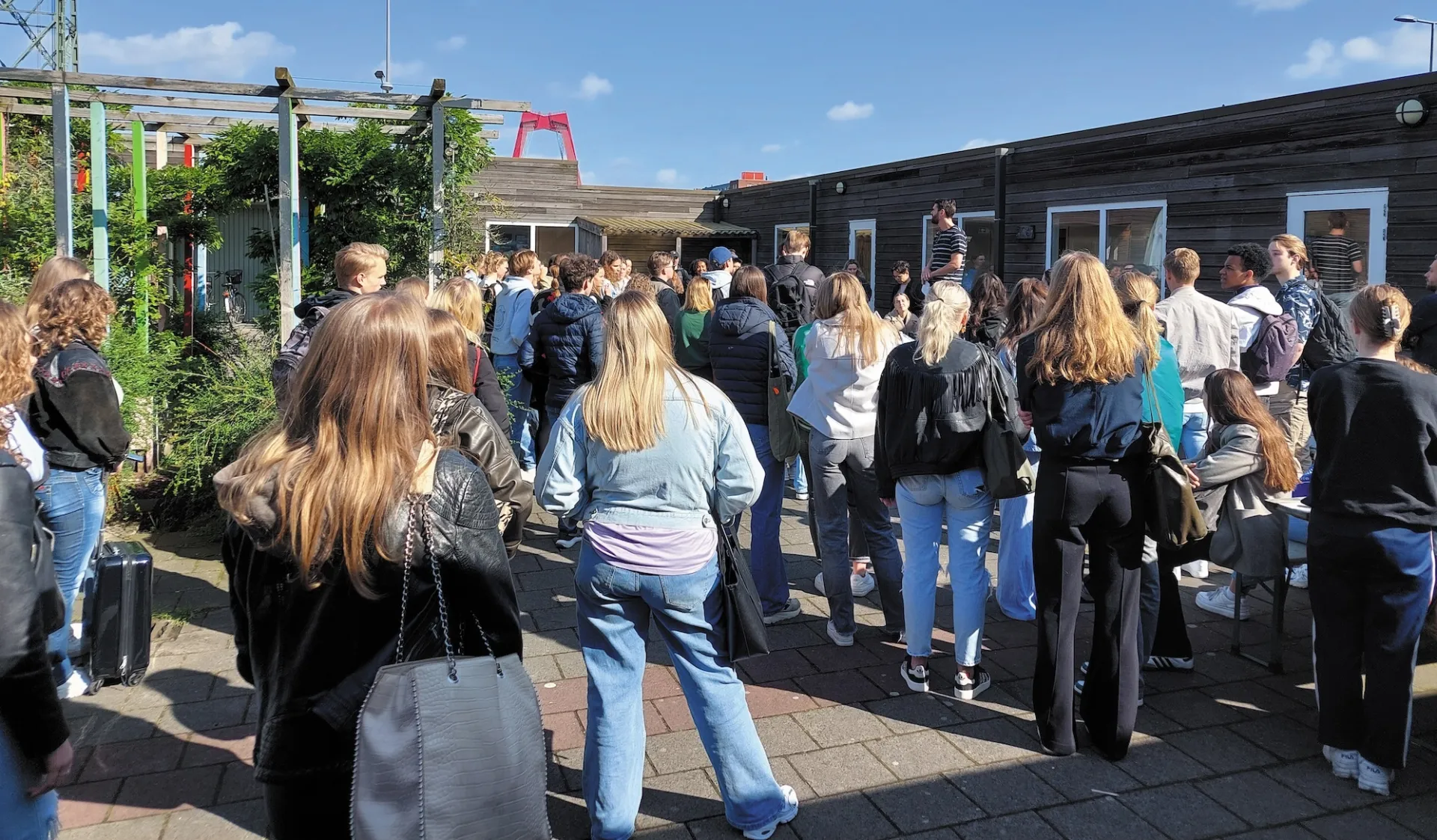
HefHouse is a centre of innovation and learning in Rotterdam South, located next to the iconic Hef bridge. This community-focussed location is where ErasmusX represents EUR in co-creating impact together with Hogeschool Rotterdam (HBO; university of applied sciences), Albeda College (MBO; secondary vocational education) and the Municipality of Rotterdam on the project ‘Redefining the classroom’. The project is focussed on talent development for (local) youth, with the aim to mitigate social inequality by empowering young people.
Within the project, ErasmusX functions as a driver and social innovator in creating and nurturing this alliance of parties working together to foster impact with and on students, communities, teachers, and institutions. Logistical challenges that accompany such a collaboration and multi-functional space encouraged the alliance to recalibrate their cooperation and aim for multi-level and transdisciplinary teaching and learning.
Through the project, ErasmusX is working to make HefHouse a basecamp for educational programmes from different educational institutions. Within this inspirational and unconventional learning environment in which MBO, HBO, and WO students work together, opportunities for groundbreaking innovation arise. Students learn transdisciplinary, 21st-century skills as they connect their theoretical knowledge to real-life cases. Within EUR, ErasmusX already works with staff from five different Schools (ESSB, EUC, ESL, ESE, ESHPM). As HefHouse also houses a youth hub, ErasmusX has set out to create a meeting place for local youth and students, organising activities to foster mutual talent. HefHouse has developed indicators to review the social and educational inequalities they aim to address, and research executed over the past year shows indications that HefHouse contributes to ‘talent development’ and ‘citizen participation’.
Its multifaceted character makes HefHouse a special place in which local youth, EUR students and academics can all make an impact on each other and reflect on their assumptions about the perceived ‘other’. Both EUR students and academics visit HefHouse through different routes and for different reasons; some as part of their course or project, others through their internship or role as a volunteer. However, the most impact lies in how HefHouse facilitates students to participate in society by meeting residents, connecting with social organisations, and eventually working with them. One student shares their perspective:
I have started to look at certain things differently because by talking to people, you get a lot of insights and things that you previously thought differently about. They look at it very differently because they are much deeper into the subject. So, I think what I have developed on is that I am much more open when looking at certain subjects… By talking to people, you get to know what the real problems are in that neighbourhood and how residents really feel.
As one of EUR’s strategic projects, ErasmusX works on the future of education at EUR. It connects the campus with the city, empowering partners in academia and society at large through community-oriented and technology-enabled projects.
Restructuring our life-long learning
EUR has extensive experience in teaching professional learners, focussing particularly on executive education with an offering of over 200 individual courses and programmes. Annually more than 6,000 participants (also known as learners) take part in these educational offerings, of which approximately 1,700 participants are in full or part-time bachelor’s and master’s programmes, 1,700 participants are in the post-experience master’s programmes and 2,600 participants in focussed courses. EUR has currently designed its life-long learning offerings mainly under private law and within private companies, whether or not in a holding structure. These programmes are mainly aimed at executive professionals. This design has proven to successfully contribute to the successive strategic ambitions of EUR (2012-2024), and to respond swiftly to the rapidly changing needs of professionals.
Post-initial learning programmes with global impact
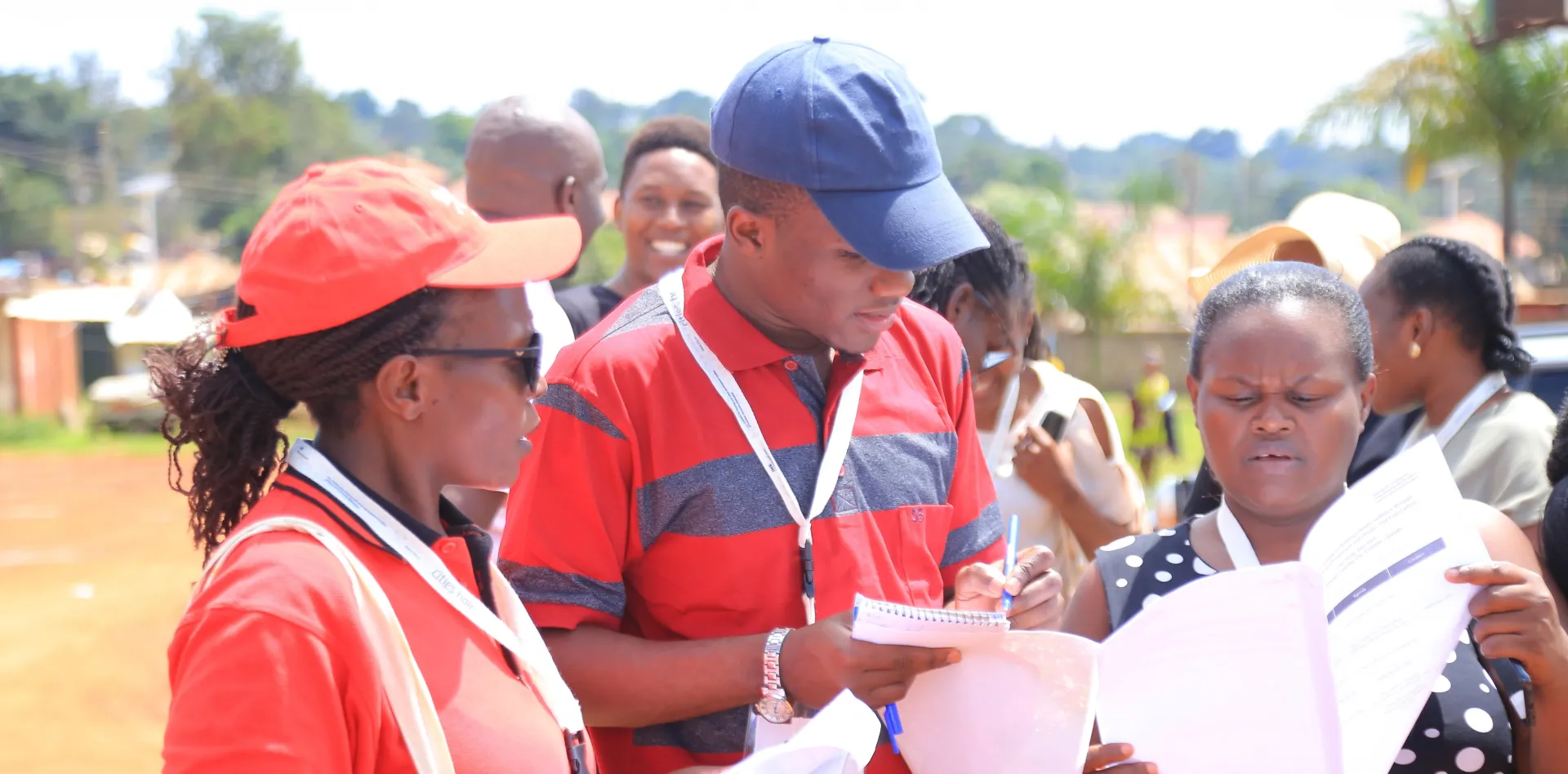
Several BVs offer post-initial learning programmes. Focussed on specific topics, these programmes may be nationally or internationally oriented and are meant to enrich the learners’ knowledge, skills, understanding – and impact. For instance, Institute for Housing and Urban Development Studies (IHS)—one of the BVs that fall under EUR Holding—offers a transformative one-year master’s programme in Urban Management and Development, empowering hundreds of professionals from the Global South to tackle urban challenges and drive societal change. There is a need for skilled urban management professionals who can address the complex challenges faced by cities globally. Through tailor-made training programmes, IHS aims to address this need by educating urban professionals from diverse backgrounds to enhance their knowledge and skills in urban management and development, enabling them to contribute to their local communities upon completion of the programme.
The impact of this master programme can be best observed through the professional achievements and contributions of its alumni. Graduates have gone on to assume leadership roles in urban planning departments, international development organisations, and NGOs in their respective countries. One of the most critical learnings from the programme is the importance of adopting a holistic approach to urban management: understanding the interconnectedness of social, economic, and environmental factors is essential for developing effective strategies to address urban challenges. ‘Three words I’d use to describe the programme are engaging, international and challenging’, says Dona van Eeden, MSc student in the Urban Management and Development programme.
A commitment to interdisciplinary collaboration and continuous learning is essential for leveraging the diverse perspectives and experiences that help develop innovative solutions tailored to local contexts. Building strong partnerships with local communities, government agencies, and international organisations is also key to achieving lasting impact. These principles are brought into practice through IHS's tailor-made training programmes at local and regional levels in countries in the Global South. Through a collaborative approach, adequate stakeholder engagement and needs assessment, and effective transfer processes, IHS has through the Orange Knowledge Programme successfully implemented programmes in countries such as South Africa, Brazil, Uganda, Sudan, Colombia, and Indonesia.
These tailor-made trainings address key issues in the countries of the requesting organisation and provide governmental staff with much needed skills to tackle local challenges, leading to long-term positive effects locally. These programmes surpass standard training by ensuring a thorough understanding of the local context and building links for international and local knowledge transfer. Using this method, the trainings are sustainable for both stakeholders and the local environment. IHS also offers training of trainers to local training partners. This ensures that local partnerships are based on common standards, that 'capacity remains with the client', and that the long-term sustainability of capacity-building interventions is ensured.
Continuing this type of training is essential in contributing to liveable cities for all. However, adequate funding, as previously provided by Nuffic (Dutch organisation for internationalisation in education), is a precondition to fulfil this mission and guarantee access to knowledge and skills for professionals worldwide. IHS continues to work hard toward realising these ambitions.
EUR’s mission of creating positive societal impact has brought changes to our lifelong learning (LLL) ambitions. We now wish to act as the preferred partner our regional partners turn to for learning and development, helping them respond to major transitional challenges. We want to build upon the expertise we have within our executive education and attract a broader target group: early and mid-career professionals who may not always have had access to academic education at an earlier (educational) career stage.
As a university, we want to broaden and better anchor our LLL programmes in the region. By making our LLL offerings more accessible based on the profession and learning needs of the professional learner and the labour market organisations, learners who are less familiar with the university can also enter. In this way, we contribute to regional impact, accessibility and change processes.
To achieve this, the importance of LLL has already been included in a starting paper co-created by all Schools and our renewed educational vision. EUR also received 2 million euro subsidy from the National Growth Fund to enable the university to further professionalise the LLL organisation. The ambition is to (1) better aggregate and present a transparent portfolio focussed on themes in the region; (2) broadening accessibility for different target groups; (3) making the most of our social sciences and humanities profile; (4) broadening LLL expertise among academic staff; and (5) setting up a connecting central LLL Service organisation in the public part of the organisation.
Lessons learned and future directions
Due to the diverse ways we have worked to transform our educational experiences – including differences in approaches, foci, and stages – we have learned some important lessons. Key takeaways: impact-driven education requires team effort, a co-design attitude, and the audacity to take risks.
For IatC, involving everyone through a pyramid approach proved vital in the process of building a solid concept: from student to teacher, from learning innovator to professional staff officer, and from programme coordinator to deans and directors; everyone needs to be involved at some level. This involvement also proved crucial in IatC’s iterative circle approach, as they organised dialogues and conferences to reflect on, narrow, and specify their definitions and to solidify their understandings into an educational vision.
Regarding courses that include collaboration with societal stakeholders, it is important to highlight that investing in relationships with stakeholders is instrumental for beneficial outcomes for both students and partners. All parties must be enthusiastic about collaborating and willing to invest time and energy. To ensure this, good and open communication with and between students and stakeholders is essential. We are mindful of the time, effort and expectations of our partners and acknowledge that additional guidance to students on how to foster such a relationship is helpful and often necessary.
Embedding time for a good stakeholder relationship into the design of the course is vital - not only for that relationship, but also for high-quality assignments. One challenge can be aligning stakeholders’ urgencies with course objectives. It is vital to invest sufficient time in defining the assignment together with the stakeholder. A well-defined design assignment is a key enabler for students’ learning processes. Similarly, it is important to keep asking for feedback from stakeholders and students, allowing for continuous improvement. To further facilitate this, IatC developed a web page with practical information for stakeholders and they launched a Knowledge Platform on impact-driven education.
However, such extra student guidance and relationship-building with stakeholder management may necessitate a new allocation of tasks. For example, in contrast to traditional learning environments, teachers may act as coaches, not only for their students but for the societal partners who facilitate student learning with a bespoke assignment; this requires preparation, skills, resources and time.
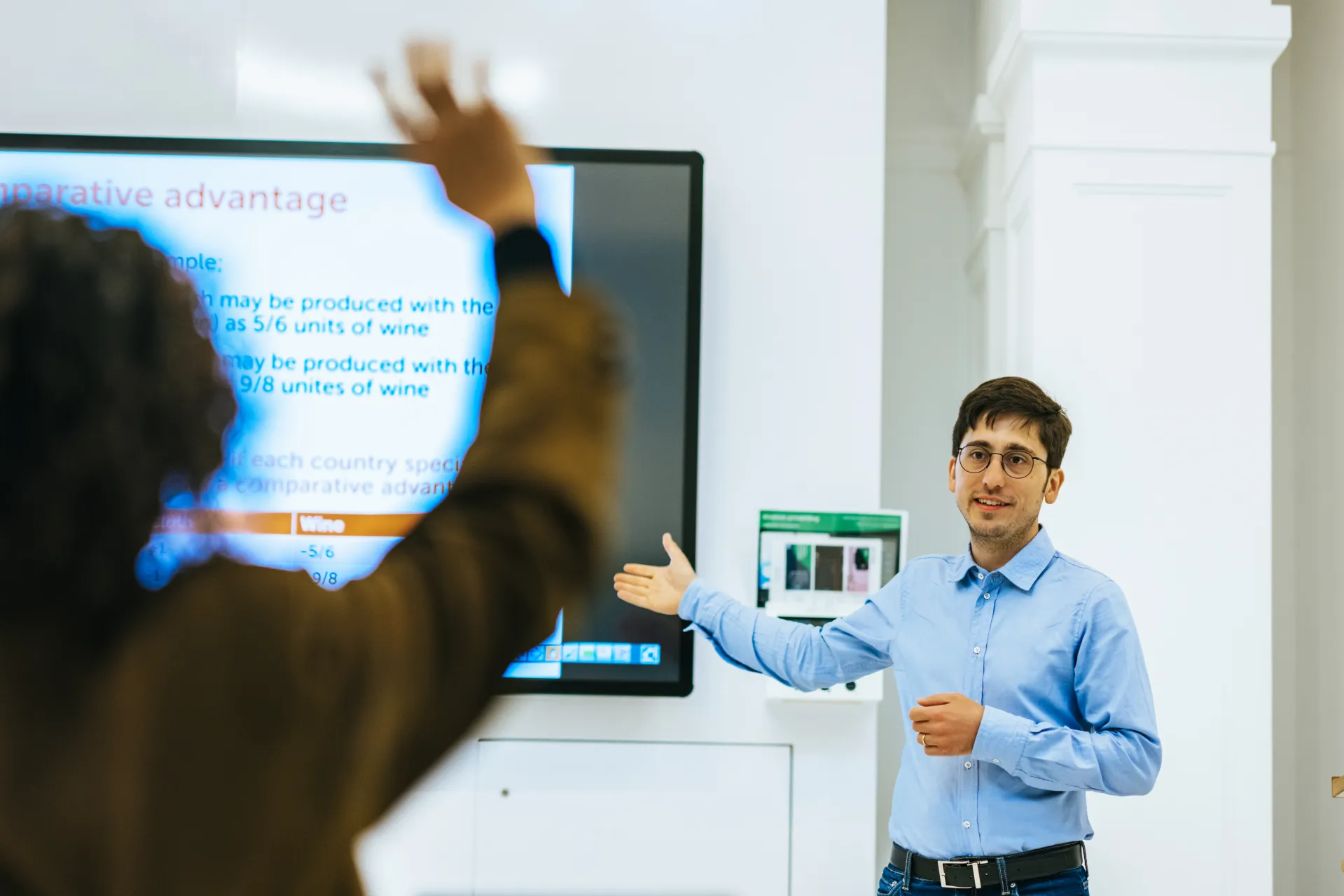
Further knowledge development, teacher guidance and professionalisation are important and involving teachers in the development process is very helpful. Related, recognising and rewarding all teaching activities, skills and competencies is necessary for transforming our education. It is imperative that these activities are formally acknowledged and rewarded as part of academic scholarship. Without such recognition, it would be challenging to garner the necessary participation and support from academic staff.
Yet, the most important takeaway is that the returns are worth it. Impact-driven education is highly appreciated by students, teachers, and stakeholders. Looking ahead, EUR is committed to continuing its journey towards integrating impact-driven education into all programmes and beyond. Schools are developing implementation plans aligned with the new education vision, which includes a strong emphasis on addressing local and global societal urgencies. While our educational programmes are an opportunity to share our knowledge with the outside world, there is real added value in better positioning EUR's engaged and impact-driven research and connecting this to our education. Students can raise awareness to societal urgencies and locate new societal stakeholders, connecting education back to our research initiatives and further promoting synergy across pillars. Moreover, our students – and our university as a whole – can learn from the communities we engage with: their unique knowledge, which includes history, stories, people, traditions, identity, connections, and so much more. A key part of impact-driven education is valuing different types of knowledge and using the synergy between them to address complex challenges.