
Intro
The core task of engagement helps us realise our impact ambitions while also complementing EUR’s excellent research and education portfolios. It unifies our Erasmian values of being societally engaged, connecting and open-minded. In this chapter we highlight how we as EUR work actively and thoughtfully to be more visible, to strengthen our networks, and how we work with our partners and communities collaboratively, to advance mutually beneficial outcomes and shared goals.

Engagement enriching our research and education
As previous examples have shown, one of the ways in which our engagement complements our research and education portfolios is by using engagement activities to give additional substance to our education and research. Here, we highlight how our engagement helps to create a context in which the impact of our education and research is enhanced.
Strengthening and supporting the relationship between EUR and the City of Rotterdam
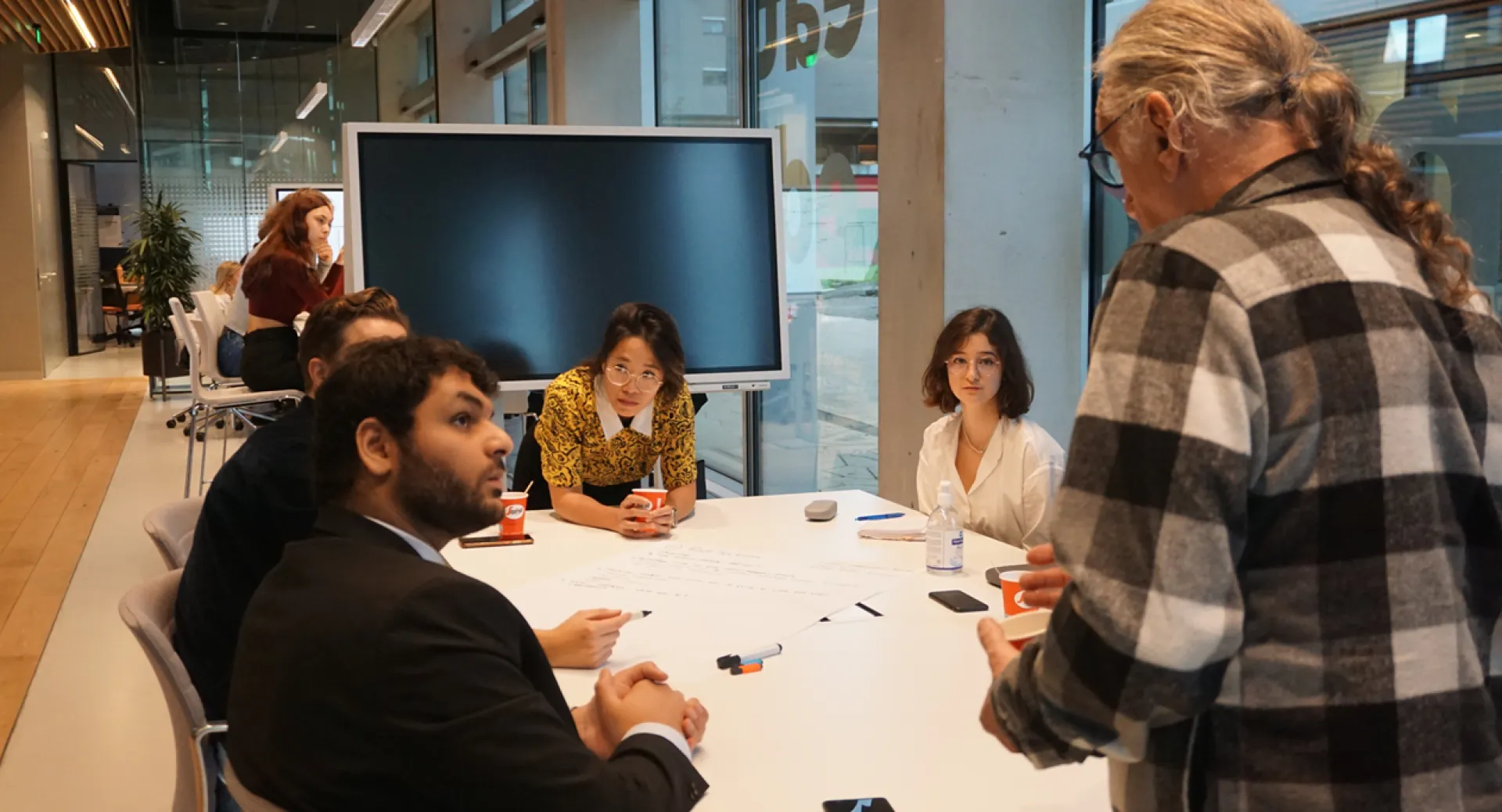
Underscoring the importance of engagement in support of our impact-driven education and impactful research, Erasmus Verbindt (EV) aims to strengthen the relationship between EUR and the city of Rotterdam. EV was initiated at the start of the current strategic period by a group of students who felt inspired by EUR’s ambition to create positive societal impact. Realising the additional time-investments a commitment to building strong relations would require for the academic staff, Max Wagenaar, Florian Wijker, and Eddie Adelmund MPhil (who were all ESPhil students at the time) created a student-led bridge-building organisation to support EUR in this mission. In doing so, they aimed to integrate a wide variety of societal challenges and concerns with the education and research programs of EUR (and since 2023 also the TU Delft).
Since then, they foster this through three closely intertwined tracks:
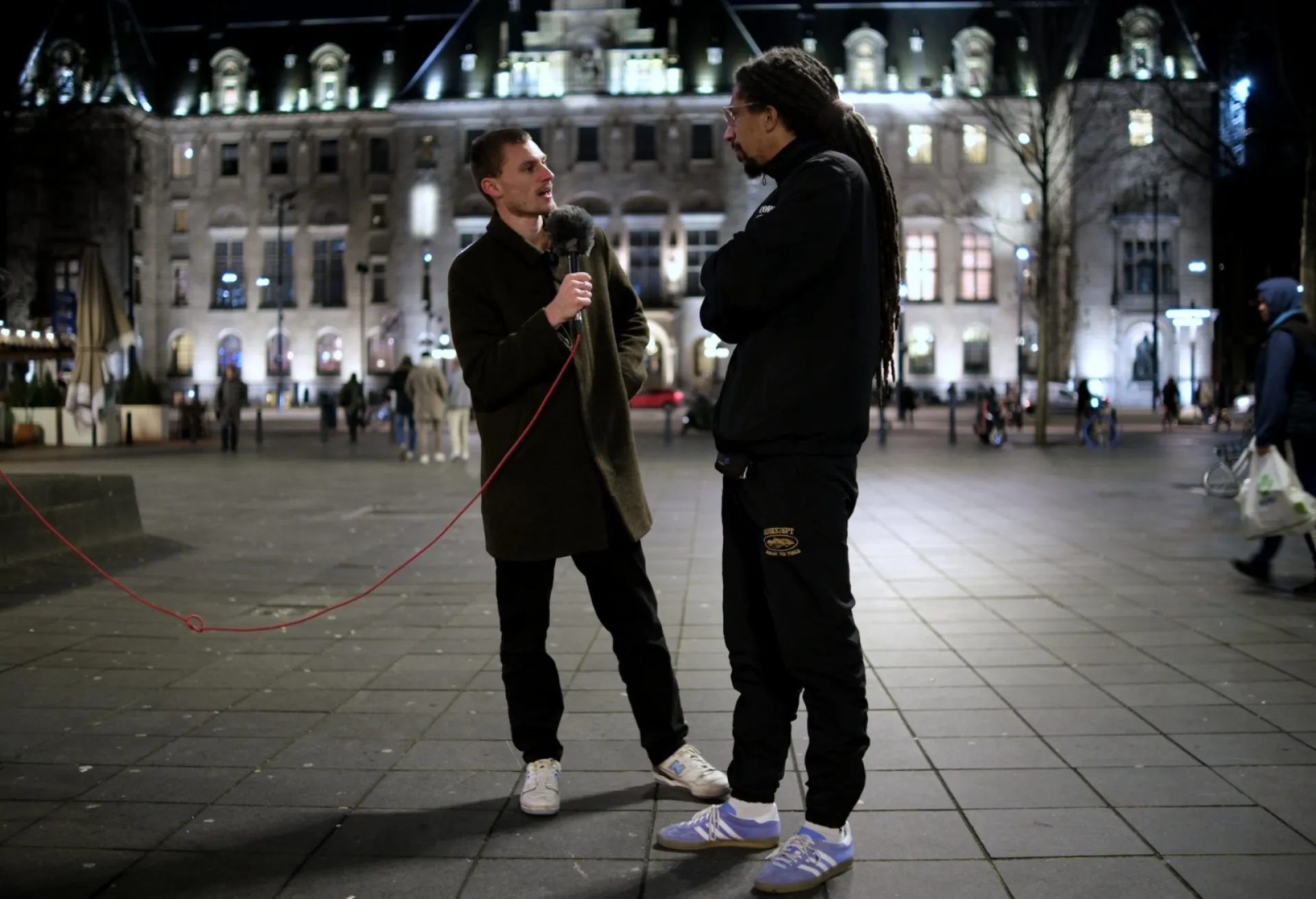
- Science communication 2.0: through an innovative podcast, EV aims to put in practice EUR’s ambition to ‘strengthen our impact identity’. An important goal for this podcast, which explores the relationship between Rotterdam and EUR through city strolls, is to bring to light the contemporary challenges faced by Rotterdam in a widely accessible format. Simultaneously, the series functions as a portrait of the countless ways in which EUR and Rotterdam are intertwined. In the third season, EV paired scientists with a variety of people who are active in Rotterdam at night. Through strategic partnerships with partners such as RTV Rijnmond, Havenloods, NRC-podcast and Fun-X and a smart multi-media strategy (which includes the output of relating newspaper articles, radio-interviews, social media campaigns, radiobroadcasting of the podcast, cinema-lectures and more) EV has managed to reach approximately 178,000 primary interactions (of 5 minutes or more) with listeners, readers, viewers and visitors between 2020-2024 and even many more interactions that lasted shorter. For EV, this points to an Erasmian formula for success, in which students work together with scientists and citizens. The high level of student involvement and the intrinsic motivation behind their efforts gave Stadswandelingen (EN: city walks) a unique profile and created a lot of goodwill with internal and external partners. This was an important reason for its success.
- Engagement support for research: The initial mission of EV was to work from the ‘outside in’ by bringing societal questions to the university to shape a multidisciplinary research agenda. This proved to be difficult, requiring more and better EUR-wide coordination. So, EV decided to focus on supporting existing interdisciplinary research teams and projects in connecting with important partners in the city. By organising 25 knowledge- and network-events in the city as well as many additional collaborations with Erasmus Professor Eveline Crone, the IDEA Center (Inclusivity, Diversity, Equity and Access Center), Cultuur&Campus (EN: Culture & Campus), the VCC Initiative, and several Convergence-partners such as Resilient Delta and Healthy Start, EV is helping academics to embed their research further into society.
- Engagement support for education: In their engagement support for EUR’s education, EV has managed to work both from the outside in and vice versa. This was possible thanks to EV’s large multidisciplinary team of students, equipping EV with a broad overview of the educational programmes across EUR and what these programmes (and their students) need. In this track EV has initiated, created, and facilitated collaborations between educational programmes and a broad scope of societally engaged organisations in Rotterdam. Their pro-active, match-making activities have resulted in a fruitful engagement for 72 courses annually, helping approximately 129 partners and over 5,000 students with 186 tailor-made and value-driven assignments, that fit both the learning objectives of a course and the interests of the partners involved.
Tackling high turnovers
Working with such a high level of student involvement gives EV a unique profile and role on campus. But it also comes with certain challenges of which the high turnover rate in staff and volunteers has been the largest. This can be difficult since one needs to go through a learning curve to be able represent the university externally. EV has tackled this challenge with a combination of strategies. Firstly, they have organised a graduated tenure track, where they encourage internal progression. Colleagues at EV often start as a volunteer before they develop into junior and senior colleagues, in which they can hold management board positions. Additionally, EV pays above average attention to onboarding procedures and transfer documents to ensure that learnings don’t leave when a colleague does. Moreover, EV has made an effort to retain the people who have been there the longest, by creating double roles with partner programmes. So, when an EV-board member has finished their master’s, for example, they stay on as a part time board member for another year or two while also working as a project manager elsewhere at EUR. That way, EV’s board members can continue to grow and learn after finishing their masters. EV also proactively offers training and even mentoring programmes, again in conjunction with other departments within EUR, by means of a ‘buddy system’ where EV-employees link up with more experienced colleagues on campus.
Cultivating our communities
One important way for us to create impact is by cultivating our communities. As such, we are constantly engaged with our community of Erasmians (students, researchers, lecturers, professional services staff, and alumni). We are one university, one community, pursuing a shared purpose together. As a university, we see all our communities as partners in our shared purpose of creating positive societal impact. Our students tell us they want to add value to the world they live in – and they want to start today, not after graduation. Therefore, we mobilise and enable them. We inspire our global network of alumni to contribute to our mission to create impact. Some Schools highlight impactful alumni with awards, like RSM's 'Force for Positive Change' award. We mobilise our communities not only by informing, but also meeting, learning from, and engaging in conversations with them. We aim to foster a continuous dialogue with policymakers about pressing societal issues. So, there are many ways in which we cultivate these different communities, some of which are highlighted in this chapter:

Academic Outreach Programme: widening participation
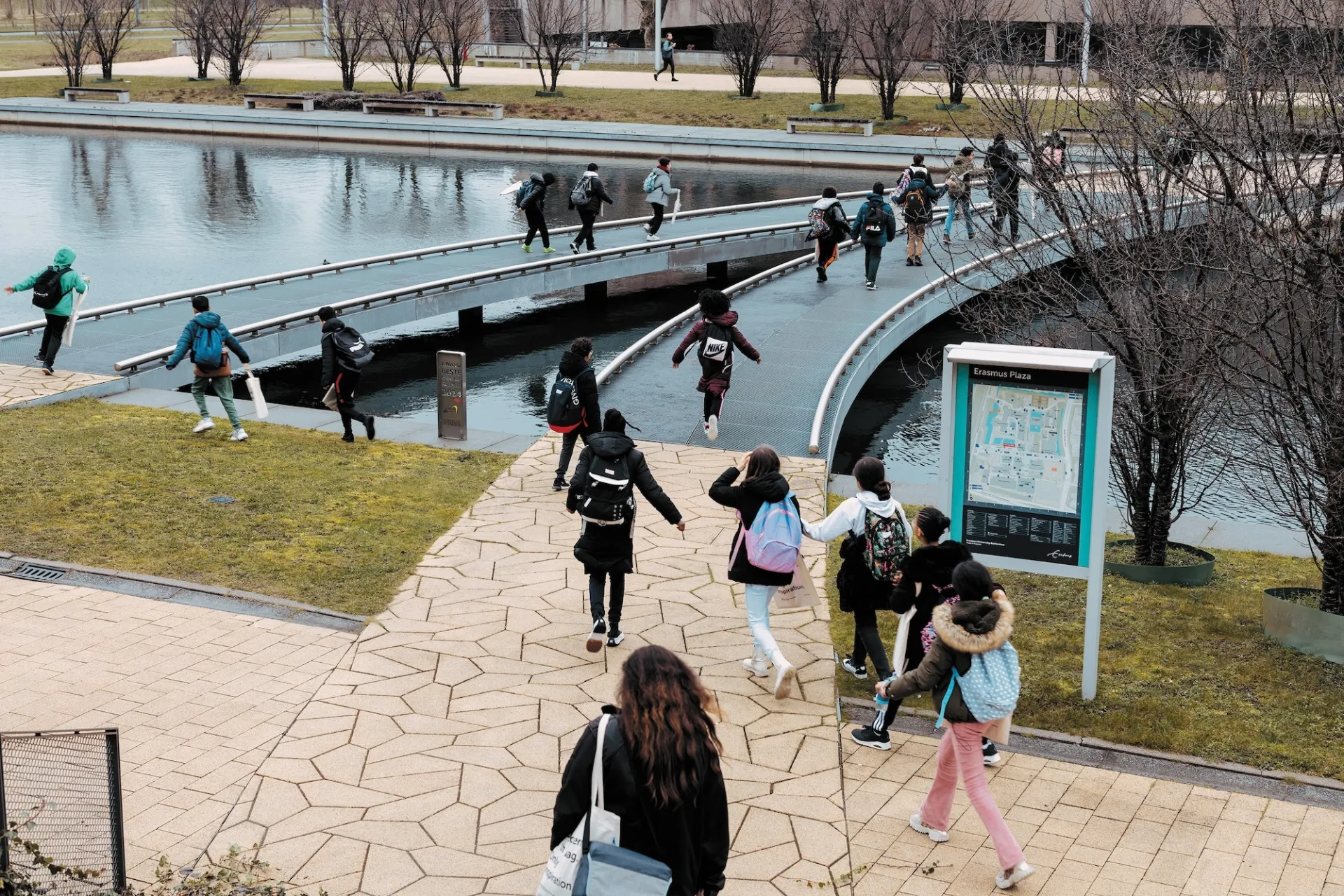
The Academic Outreach Programme (AOP) is an example of engagement at EUR. Initiated by former Chief Diversity Officer Prof. Semiha Denktaş and IDEA Center colleagues, the 2020-2024 strategic programme aims to create equal educational opportunities for all students, from primary school to university education. The programme is based on guidelines outlined in the evidence-based framework of the NERUPI network. This network of universities seeks to widen participation in university education by minimising inequalities related but not limited to social class, income, ethnicity, locality, gender, and first-generation background.
The AOP has three action lines that interrelate with each other and with pillars of the IDEA Center. The Early Outreach action line focuses on key transitional moments in the (early) school career where educational institutional arrangements can increase inequalities between pupils of different backgrounds. In collaboration with primary schools, secondary schools, and societal organisations, interventions are co-created to support pupils (and their families) to navigate these transitional moments and simultaneously offer accessible introductions into university education, the university campus, and student life. In the Student-Centred Support action line, the AOP collaborates with various student services and programmes to create a more inclusive and accessible university environment at EUR. Finally, the Building New Blocks action line supports employees and students of EUR to conduct grassroots outreach projects, with the aim of facilitating and embedding ideas coming from within the EUR community on the topic of (un)equal opportunities.
Broadening children’s perspectives
Societal engagement is especially at the forefront in the Early Outreach action line. The primary and secondary schools and societal organisations are specifically selected based on the demographic characteristics of their pupils (e.g., majority future first-generation university students). Through equitable collaboration with important stakeholder groups, e.g., school administration, organisational boards, educators, parents, and pupils, mutual understanding and support for co-created interventions is fostered. Some of the interventions focus on the development of soft skills, such as academic self-efficacy, i.e., the belief in one’s academic competence, or learning strategies, important for the transition from primary to secondary school. Other interventions focus on supporting pupils in making difficult choices in their school career, such as their profile choice or study choice. Educators are noticing the impact of these interventions in their pupils’ lives. As Dr Anne Wijtzes, programme manager of the AOP, explains:
'Educators give us feedback, for example, that the pupils are implementing their lessons on how to increase academic self-efficacy in other domains of their life. However, I believe the strongest impact of our outreach efforts comes from the inspiring and motivating effects of our student ambassadors who do the actual outreach work. The personal stories the students share can make the pupils think: ‘University is also possible for me.’
This role-model effect is a strong driver of the societal impact of the AOP. In the past years, more than 40 EUR students were recruited, trained, and further professionalised to deliver the various outreach activities and programmes. Their work ranges from participating in co-creation sessions to giving (public) motivational speeches and supporting or independently conducting outreach-focused workshops. Coming from similar backgrounds and sharing comparable life experiences, the student ambassadors are shining counterexamples to the prejudicial narratives that surround many of the pupils. For example, a student ambassador shared:
'Within the Dutch educational system, many pupils can lose their confidence or maybe change their ambitions because they don't see themselves going to university. Because they don’t know anyone in their family who went to university or because of things teachers or fellow pupils say to them. For example, in one of my schools, a pupil said that he would like to go to university, but he said that he didn't really think that Turkish students belong there. So, then I told him that there's a very big Turkish community within EUR.'
Planting seeds for change
The student ambassadors share that it is crucial to acknowledge to the pupils that structural inequalities and stereotypes in the education system do exist. At the same time, they want to demonstrate that alternative outcomes are possible. The student ambassador adds:
'Sometimes, when you have short personal encounters with pupils, it is more like planting a seed. Having a short conversation may start challenging a bias they have, and then they start to think about things a bit differently. Another example: one of the pupils wanted to go to medical school but was hesitant because of all the tests you need to get through. So, a student ambassador helped them prepare. Then they got a message from the pupil that they got through. It is these small and big examples that show how we as role models can make a difference, and how we are trying to create more equal opportunities in education.'
Working with the AOP not only impacts pupils; it also changes the perspectives of the student ambassadors themselves, as another student ambassador describes:
The conversations I had this year with teachers and all kinds of people who are trying to tackle inequalities of opportunities [in education], and the student community we’ve built, and the stories we’ve shared with each other, are all so valuable. All these experiences have motivated me to make a difference. My view is that this world is far too small to have these big problems.
Erasmus Sustainability Days
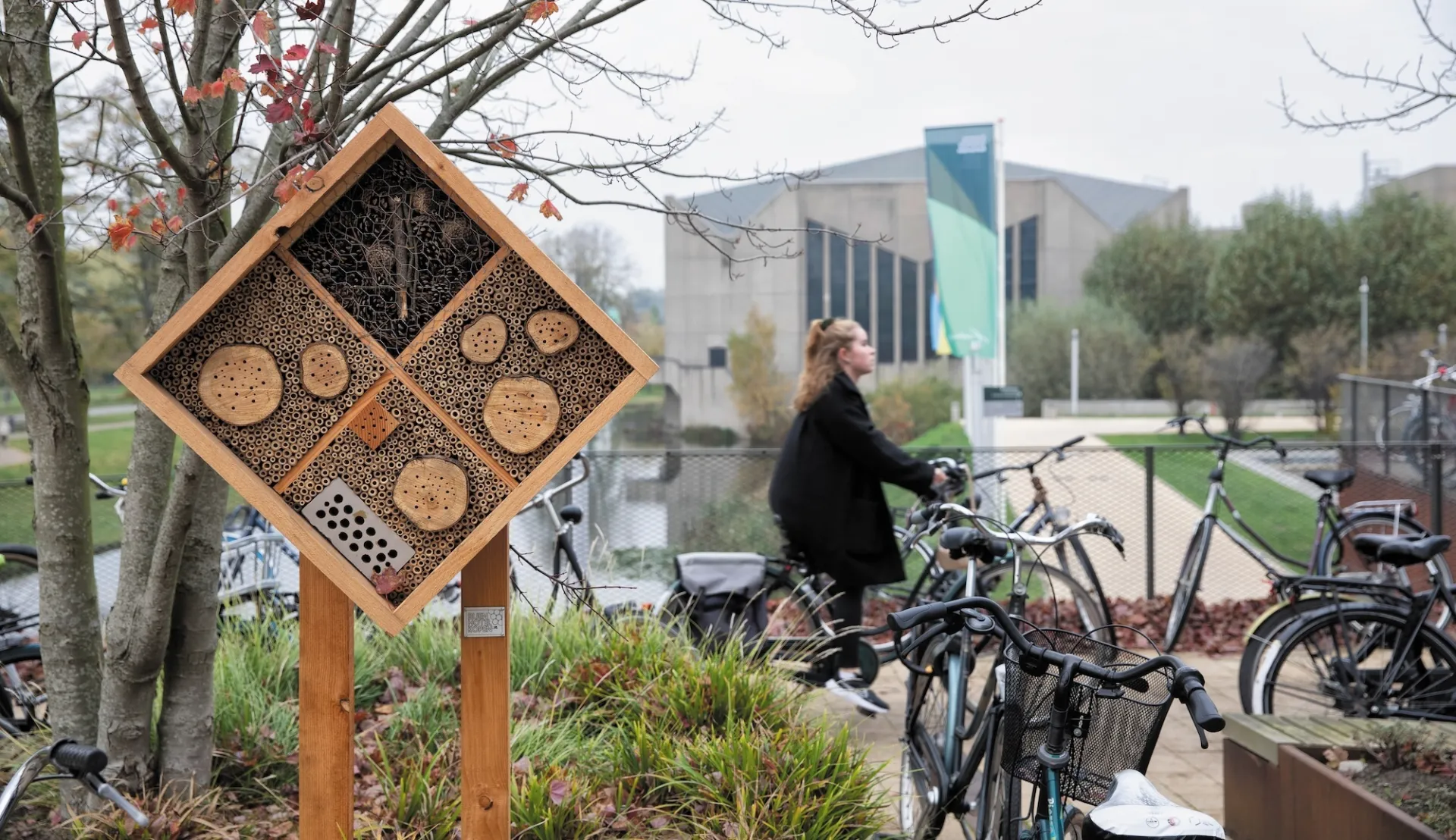
Erasmus Sustainability Days (ESD), which were organised by and for students, were held at EUR on May 13-17th, 2024. Expanding from previous years’ three-day event to a five-day event, the 2024 ESD attracted approximately 200 EUR students. ESD originates from the student association Erasmus Sustainability Hub, which has 70 active members and is a community for students interested in sustainability. Speaking with Sustainability Hub Board members and ESD Managers Mika Belchhaus (International Business Administration) and Anastasia Dziman (Management of Internation Social Challenges), they share that the event aimed to create community and raise awareness around sustainability in an approachable way. As Belchhaus explains:
I experienced that as an individual you often feel a bit helpless. And then with my studies, even though RSM is committed to the 17 SDGs, the degree falls short in teaching sustainable practices. There’s a specific stigma around sustainability or people interested in sustainability. I really want to change that, so I decided to lead this year’s Erasmus Sustainability Days committee. The focus this year was on the interaction between sustainability and business.
Diversity in societal perspectives: holding space for meaningful conversations
Bringing in outside voices from the business sector was an important focus of ESD. Companies like Microsoft, Phillips and PWC all participated. ESD events included a panel discussion on handling ocean pollution, with Rotterdam-based non-profit The Ocean Cleanup, a foundation that brings together engineers, scientists, and enthusiasts to develop technologies to eliminate plastic in the ocean; BP oil and gas; and EUR Prof. Rob van Tulder representing the academic perspective. Another was a discussion on sustainable travel with NS and low-cost airline Transavia. These events were engaging and allowed students to ask questions directly to the heads of sustainability from industry-leading companies. During ESD, there was also a roundtable discussion to bring industry leaders and students together in a dialogue. The tables had five students and two industry leaders, and they discussed three topics in three hours, Belchhaus adds:
'It was super interesting and beneficial to the students because they got to discuss topics like biodiversity loss with important stakeholders. Next to companies like Dassault Systèmes, KPMG and Rabobank, we had companies you wouldn’t expect to be there, like a representative from Shell, for example. While we view energy companies like Shell critically, we believe that if we want to achieve change in the future, we really need to incorporate them in the discussion because they are not going to disappear anytime soon.'
ESD also included stakeholders from groups like the Prostitution Information Center in Amsterdam to address the social aspect of sustainability alongside the environmental and economic aspects. Stakeholders were contacted via LinkedIn and alumni networks and were quite enthusiastic to be involved, as Dziman says:
You’d be surprised by how many alumni and industry experts are intrinsically motivated to join such an event. And to those that were not intrinsically motivated, we said that there will be a lot of students in attendance so if they are looking to recruit or have internships available, this is the place to find the talent.
ESD benefitted students in building connections, raising awareness about sustainability, and in finding internships or establishing relationships that could add to their theses. Moreover, ESD had cultural and conceptual impacts in that it was a moment where students could connect, ask questions, debate their points of view and gain new perspectives while enhancing connectivity. In the future, the Erasmus Sustainability Hub would like to involve more students—and staff—in their sustainability discussions and grow their voice across campus.
Investing in meaningful alumni engagement
Our alumni are a vital and growing part of EUR’s community. This global network of over 170,000 former students forms a strong and diverse network of professionals – a resource that can help us achieve our goals in terms of impact and education. They are our ambassadors, and a great source of constructive criticism on the quality of our education. However, this invaluable network has been underutilised in helping EUR contribute to societal and academic advancement. To tackle this, the 2023-24 Alumni Engagement Strategy has focused on engaging alumni in activities that not only connect them with the university, but also enable them to contribute positively to society. The strategy aims to strengthen community connections and build a tighter, more connected alumni community that feels invested in the university’s future and its impact on society.
To achieve these objectives, the Erasmus Alumni Relations Team (EART) has implemented several strategic actions. Firstly, the EART has made a significant investment in robust communication channels. Through their newsletters and social media, the EART has worked to foster a culture where alumni feel valued and see tangible results of their involvement, which in turn encourages sustained engagement and support. Furthermore, the introduction of programmes like MentorMe and Erasmus Career Café further connect alumni with students and other alumni, enhancing professional and academic support within the alumni community. Both initiatives are designed to provide additional career support for the EUR community and bridge the gap between studying and working life.
In the first quarter of 2024 alone, over 250 alumni have contributed more than 1,000 hours of service, supporting students with career supports, talks, and community outreach. Over 3,600 alumni are part of MentorMe, a platform designed to develop one-on-one interactions between EUR students and alumni to share knowledge and insights gained after graduation. Mentors get the opportunity to inspire, be a role model, advise and coach, providing mentees with new insights, expanding their horizons, discovering new opportunities, exploring potential careers and building their network. These structured engagement programmes are likely to not only increase alumni engagement through various platforms but its expansion across RSM, ESE, ESL, ESHCC, EUC, ESSB, and ESHPM (with the other Schools aiming to follow suit in the upcoming years) also led to deeper connections and professional growth within the alumni community. Additionally, EART introduced initiatives (supported and enabled through the communication improvements) aimed at mobilising alumni to create impact through financial contributions to, and volunteering for, initiatives with societal impact. So far, this has resulted in securing €470,000 in donations for the Annual Giving programme and 1,800 engaged alumni.
Cultivating a global network from The Hague
ISS actively works on network participation of their scholars with their societal stakeholders. With their location in The Hague, they actively build on relationships with ambassadors from countries around the world. Through their communication and event strategy —which they are working on to further improve— ISS increasingly works to become a platform for discussions between government and public officials and scientists. ISS hosts events around all kinds of salient issues, ranging from sustainability in Latin America to the role of toxic materials in warfare. They invite societal stakeholders, including NGOs, ambassadors, and multilateral organisations, to hear from ISS scholars who share their research directly. This sharing creates a direct link between academic knowledge and societal partners for whom that knowledge is relevant.
An important precondition for such a strong engagement portfolio in support of ISS’s research and education was a stakeholder analysis. By mapping the countries and topics in which ISS academics, students, and alumni are involved, ISS continuously works to engage them in any meetings or events in which the right stakeholders are involved. However, keeping track of this is a challenge because of the ever-evolving collaborations of scholars. For the alumni relations, ISS keeps a Customer Relationship Management system. However, for academics, ISS has a more organic approach to it. This requires active communication from the leadership of ISS in sharing their objectives and strategy and the collaborations and relationships they are pursuing.
Relationships may ebb and flow, depending on the energy of the School and its stakeholders and their respective institutions. Expectation management is key: you do not want the stakeholders to expect something that you then do not deliver. Besides good expectation management, ISS also tackles this issue by organising the multi-partner events to build and maintain stakeholder relationships. This way, relationships with stakeholders are continued, and ISS continues to share valuable knowledge with them, even when stakeholders are not actively involved in a specific project. Navigating these relationships always requires navigating your fundamental values as relationships change you. This is a dynamic process. However, that is not to say that you do not look critically at the questions or requests posed by stakeholders.
In the end, impact is often intended to serve the needs of marginalised communities--not those in power. This requires continuous reflection on boundaries and having internal discussions about these relationships and whose interests to include. In the end, making an impact requires engaging with a world that is more complicated than our neatly organised academic world.

Connecting academia and policy for societal impact
For the past several years, Prof. Anne C. Gielen from ESE has been striving to forge vital links between academic research and policy practice. She does this by organising inspiring sessions that bring these two worlds together. She initiates and coordinates these sessions which are designed to enable constant dialogue and collaboration to address pressing societal challenges.'I find it incredibly rewarding to take research beyond the confines of academia and engage with professionals in the policy world who are tackling these issues on a day-to-day basis and learn from each other’s perspectives and experiences', says Gielen.
The sessions have a creative and interactive format, fostering deep, meaningful discussions on various topics such as inequality, educational challenges, and health issues. Each session’s topic is selected based on its current scientific and societal relevance. A keynote speaker provides an overview of the scientific landscape related to the theme, followed by roundtable discussions involving experts from both academia and policy fields. These discussions are structured around specific questions and statements to guide the conversation and ensure it remains productive and focused. While Gielen coordinates the overall series, she ensures that the experts’ input helps shape the event.
Fomenting new research directions
The success of the first session exceeded expectations, which prompted the decision to make these workshops a recurring initiative, held once or twice a year. ‘For researchers, it's incredibly useful to understand the challenges policymakers face, which in turn can inspire new research directions’, notes Gielen, adding that ‘conversely, our scientific findings can provide new insights and tools for policymakers’. This was evident in a session where, during a discussion, representatives from different fields exchanged ideas on how to address the issue at hand in their regions, leading to cooperative efforts and shared strategies.
The sessions not only benefit policymakers but also offer significant advantages for researchers. ‘By interacting with policymakers, we learn about the real-world issues they grapple with, which can inspire new research questions and directions’, Gielen says. This interaction also opens up opportunities for researchers to access unique data and insights from policy partners, enhancing the potential impact of their work.
One of the main objectives is to create informal networking opportunities. ‘We deliberately design the afternoons to include ample time for informal conversations, such as coffee breaks and post-event receptions’, Gielen explains. ‘These moments are crucial for building connections and allowing participants to engage in more relaxed, yet equally important, discussions’. Previous sessions have already fostered new collaborations between researchers and policymakers, inspiring continued engagement and innovation.
Looking ahead, Gielen plans to continue these sessions, exploring new themes and maintaining the collaborative spirit that has defined the series. ‘From the very beginning, our societal partners have been enthusiastic and willing to collaborate’, she says, envisioning that, over time, themes may be suggested by the partners themselves, ensuring the sessions remain relevant and impactful. ‘The societal impact is twofold: we help policymakers develop better-informed policies while gaining valuable insights that drive scientific progress’, Gielen concludes.
In essence, it's a simple concept—bringing the right people together—and once they are together, the resulting chemistry is incredibly rewarding

Demonstrating our impact
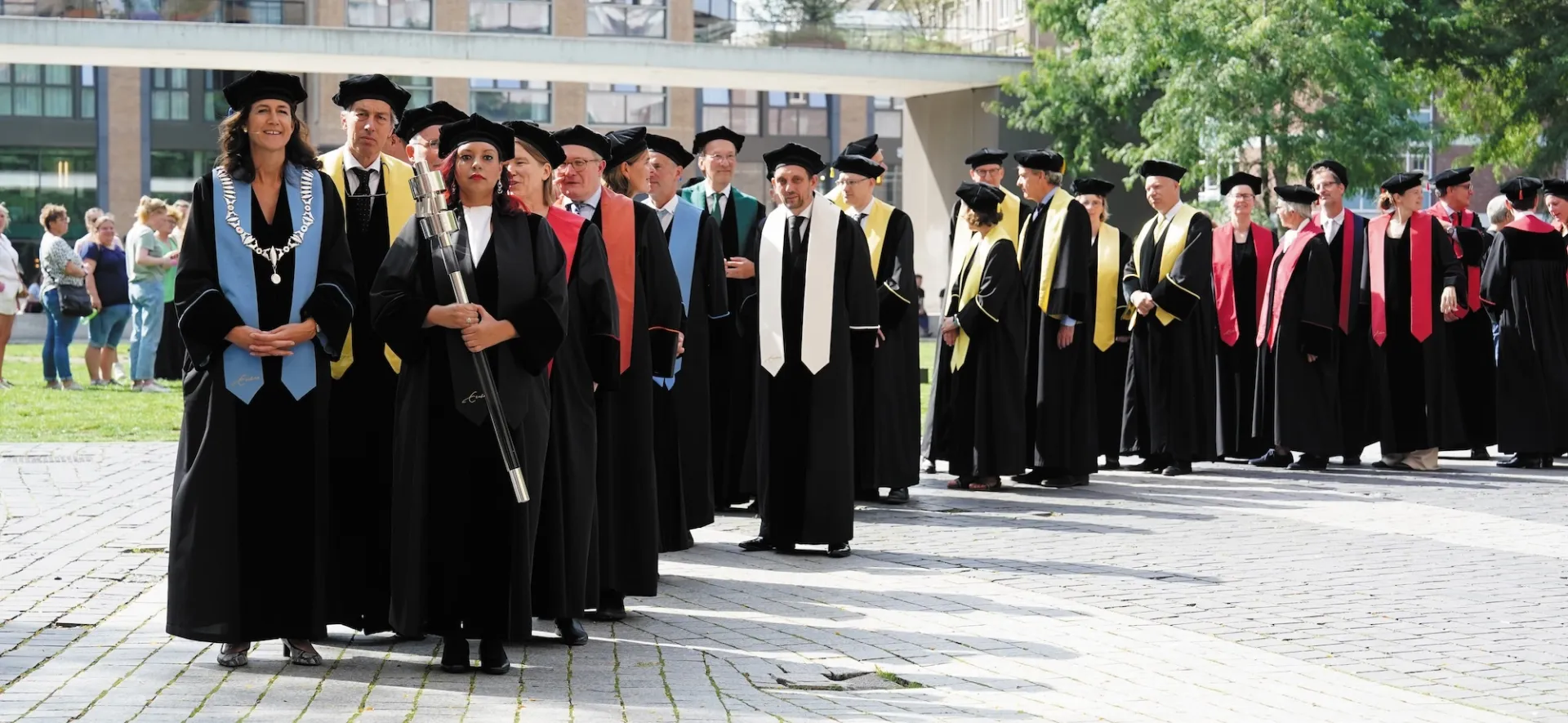
To ensure that others can also learn from and get inspired by EUR’s experiences in becoming an impact-driven university we need to demonstrate it. This allows us not only to show the value of the work we do, but also to foster a community around creating positive societal impact through our research, teaching, and engagement. How we demonstrate our impact can look different across disciplines and Schools. Some examples of School based initiatives and case studies are:
Showcasing impact case studies
One way in which ESL demonstrates their impact is by showcasing ten different impact case studies on their website. The impact of the studies does not only derive from the outcomes in terms of addressing societal challenges, but also from the way in which these societal challenges impacted the research projects, informing their setup and scope. Moreover, the importance of the education of the next generation of lawyers and criminologists (as well as academics) is emphasised in the impact case studies. Importantly, communicating about these case studies requires time and capacity. For ESL, the intention remains to bring several impact case studies online every year. However, this has not yet been achieved due to a lack of capacity. It requires the effort of academics as well as a journalistic writer. Therefore, ESL will make investments in the coming year to continue the project with greater impact.
Creating a dedicated communications strategy for one impactful initiative
ESHPM also aims to demonstrate their impact through impact case studies. Through an internal request, the newly appointed strategic communications advisor Alizia Kamani MSc and her colleagues Marina van Weele MSc (Team Leader Marketing & Communication ESHPM) and Patricia van Loo-Kemp MSc (Communications Advisor) have asked all ESHPM’s departments to share one ongoing project that deserves and would benefit from extra communication resources because of their potential positive societal impact. This additional support consists of a stakeholder analysis, a communication plan, a communication funnel and follow-up (where necessary), compelling content, a content and activity calendar, and channel guidance. This way, the communication resources are used strategically to not only communicate about but also enable ESHPM’s positive societal impact.
Documenting on the ‘Land deal politics initiative’ in Colombia
One example of how additional communication support can help to tell the story of impact, is LL.M. Jovana Paredes’ story about Erasmus Prof. Jun Borras’ work in Colombia. In March 2024, through her role in ERS, Paredes joined Borras—a leading expert in the field of Critical Agrarian Studies at ISS—in Colombia to attend and document the Land Deal Politics Initiative International Conference on Global Land Grabbing at the Universidad de los Andes, Bogotá, and participate in two eye-opening site visits. Through her storytelling, Paredes aims to demonstrate the impact of this important project:
What struck me most was not just the complexity of land issues in Colombia but the power of engaged research or scholar-activism to make a real difference. Engaged research goes beyond academic interests, embracing a participatory approach that values the voices, knowledge, and expertise of community members. This was vividly illustrated in our interactions with the people of San Joaquín and Venecia, where the enthusiasm and openness of the communities reminded us of the human dimension of research.
Prof. Jun Borras is one of the Erasmus Professors, a distinguished professor working in a transdisciplinary way to achieve societal impact on strategic themes crucial to EUR. In doing so, the Erasmus Professors are figureheads of the university.
The conference was partly co-organised through and with support from the European Research Council (ERC) Advanced Grant project RRUSHES-5 and the EUR Erasmus Professor Programme.
Impact through enterprising
Societal impact also means connection, cooperation, and expanding our boundaries beyond the confines of our university. We want to work in cooperation with society to create impact. Enterprises can be a vehicle for this movement, as they create jobs and welfare in the region. Therefore, we foster an environment that encourages an enterprising mindset. This environment enables our students, academics, and staff to play an active role in the way research and knowledge are put into practice; and offers them an opportunity to develop entrepreneurial skills that will benefit their future careers and lives. In this report, we highlight some of the initiatives through which we foster and enable this entrepreneurial mindset:
- Working for and with societal partners to address critical issues
- Algorithmic solutions for societal problems
- Working to prepare society for a sustainable, data-driven future
- Forging enterprises for positive societal impact
- An incubator for Impact Centres
- Fostering entrepreneurial competencies and high-quality research
- Empowering women entrepreneurs through inclusive entrepreneurial research and education
- Transforming impact ambitions into tangible results
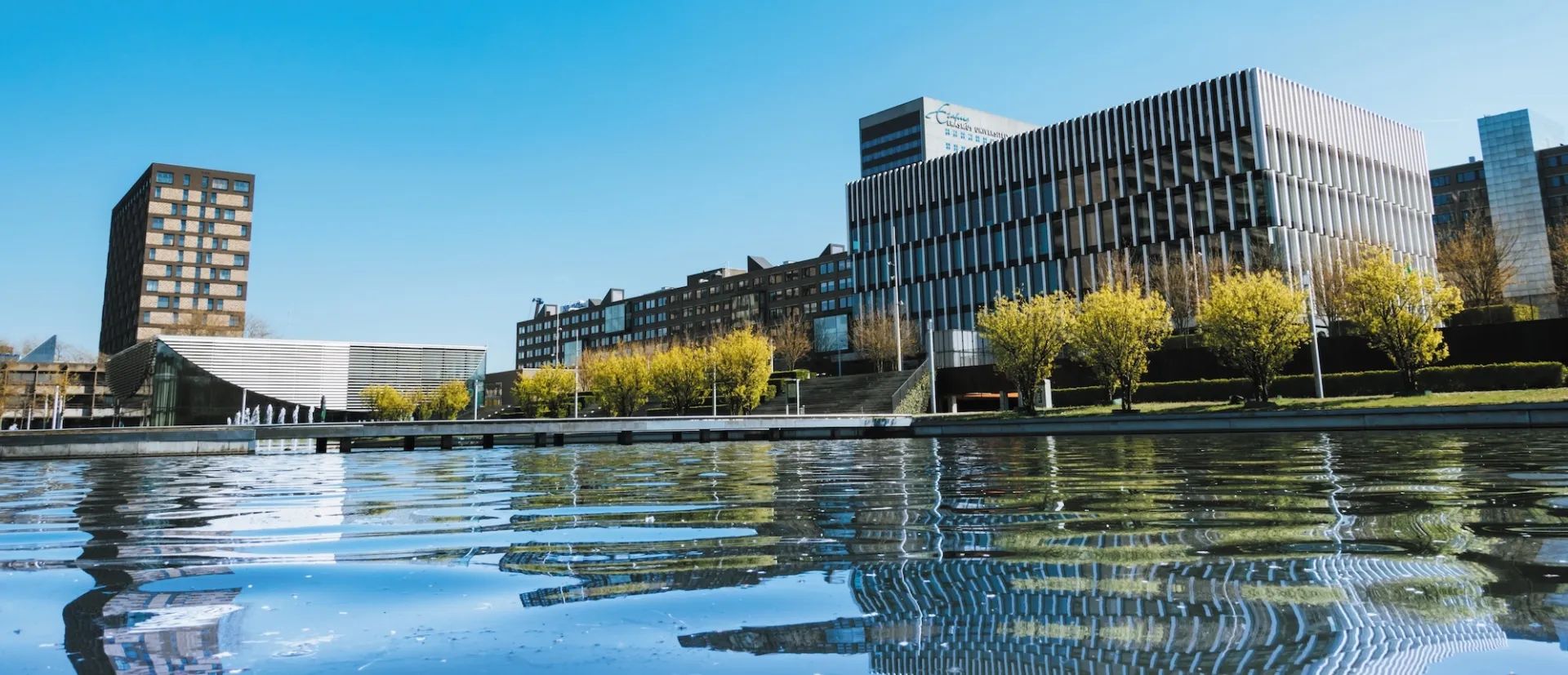
Established in 1995, EUR Holding supports the development and performance of market-based activities that are related to the core activities of EUR. It has grown to encompass 16 private limited companies (NL: BVs), each connected (to varying degrees) to a School of EUR.
The structure of EUR Holding allows its BVs to link the knowledge and expertise from academic specialists with the experience of organisations from both the public and private sector. Although each BV operates separately, they are unified by a common mission: to further translate EUR’s public knowledge into societal value. To achieve this mission, EUR Holding serves as a vehicle for consultancy for various organisations (of the public and private sector), contract research for society and organisations within society, and post-experience programmes for lifelong learning (as highlighted in ‘Renovating our educational experience’). Initially established with a profit-driven orientation, EUR Holding has shifted its focus to prioritise societal impact. While maintaining a sustainable financial position remains essential, the primary goal is now to foster positive societal change. This strategic shift is exemplified by three of its BVs—IHS, Erasmus Centre for Urban, Port, and Transport. Economics BV (Erasmus UPT), and DRIFT BV—which have formally amended their statuses to reflect their commitment to societal impact over profit.
Working for and with societal partners to address critical issues
By conducting demand-driven research in collaboration with EUR Schools and other universities (both nationally and internationally), Erasmus UPT research addresses critical issues in ports, cities, transport, and mobility with an economic and management perspective. Notable projects include the ongoing research projects for SmartPort, aimed at academic research that has direct value for stakeholders of the Rotterdam port complex; continuous research actions in Resilient Delta, aiming to apply academic knowledge to societal issues in the Rotterdam region; two large-scale research projects for Horizon Europe under the green deal call, aimed at energy transition in ports and airports (2021-2026); and a cooperation between Erasmus UPT and ESE for the yearly evaluation of the economic indicators for the City of Rotterdam. The insights that these projects provide enable decision makers to take the best decisions, for example in the development towards zero-emission ports and cities: where to invest, what incentives to bring to market, how to organise things with the stakeholders involved. These projects also help policy makers at national and local level to better define their policies for the development of cities and ports against disruptive external factors like the climate crisis and geopolitical pressures.
Algorithmic solutions for societal problems
Erasmus Q-Intelligence leverages scientific knowledge for public benefit. For instance, the CIAT (Computerised Integration of Alternative Transplantation Programmes), optimises kidney exchange programmes to save lives, particularly for hard-to-match patients. Living donor transplantation is the preferred treatment for kidney patients in need of a transplant. Unfortunately, it frequently occurs that kidney donors are incompatible with their intended recipient. In the CIAT initiative colleagues of Erasmus Q-Intelligence collaborate with the Nephrology department of Erasmus MC and the Econometric Institute of ESE to design algorithms that can optimally match patients and donors within a kidney exchange. Considering the possibilities for transplantation across immunological barriers, these algorithms have resulted in many lives saved, particularly for hard-to-match patients. To further the impact of this initiative, the algorithms will be employed in the national kidney exchange programme operated by the Dutch transplant foundation.
Another example is the "Equal Pay for Equal Work" project, which addresses the substantial and persistent pay gap between men and women. APG, with around 3,000 employees, is one organisation Erasmus Q-Intelligence helped to bridge this gap. They conducted research about the dynamics of mobility within the organisation. They found a significant gender pay gap of 2.2% and followed up with a root cause analysis. This led to a pay increase for 125 women in APG: the women whose salaries were found to be lower than those of men in similar positions.
Working to prepare society for a sustainable, data-driven future
Based on a firm belief that data, algorithms, and AI act as vehicles to bring the necessary changes and transitions required to confront current and future societal challenges – and filled with the courage to go off the beaten path – the Erasmus Centre for Data Analytics (ECDA) aspires to prepare society for a sustainable, data-driven future. To achieve this ECDA is organised around 25+ expert practices that facilitate over 300 researchers at EUR to establish multidisciplinary collaborations and approaches across Schools, and to collaborate with societal partners through innovation projects. By leveraging these collaborations to ensure that technology is developed ethically, trustworthy, and with a human perspective, the ECDA aims to enable technological developments that contribute to solving complex societal and organisational challenges. ECDA facilitates collaborations and knowledge sharing around AI between societal and organisational stakeholders and EUR researchers in several ways.
For example through the Erasmus Data Summit, which aims to:
- inspire participants to understand the opportunities of data, AI, and immersive technologies;
- to critically reflect on the challenges and societal implications;
- and to introduce and engage students and staff to the latest developments, while facilitating community-building and new connections between academics, public and private stakeholders in which experts from academia and educational practice provide an overview of the latest advancements in various fields: analytics, machine learning stakeholder engagement, transformation, privacy, and ethics. Here multidisciplinary teams of education specialists, data analysts, data scientists can work on a concrete project within their organisation, with the support of a coach.
In collaboration with SURF and with support from RSM BV, ECDA has also developed a ‘leadership challenge’ training programme. Launched in 2022, the programme is designed to provide frameworks and support to help educational institutes (MBO, HBO, WO) to realise value from data in education, research, and operations, while facing changes in the educational landscape. The aim is to initiate tangible changes in how data is managed and studied within an institution, transcending departmental boundaries.
Within its community, ECDA hosts diverse programmes like AIPact (a research programme focussed on the societal impact of AI) and the AI@EUR programme. The latter aims to foster responsible and ethical AI use at EUR, for instance by creating the necessary guidelines, governance, and a toolkit. Furthermore, ECDA also supports the AI, Data, and Digitalisation centres of Convergence.
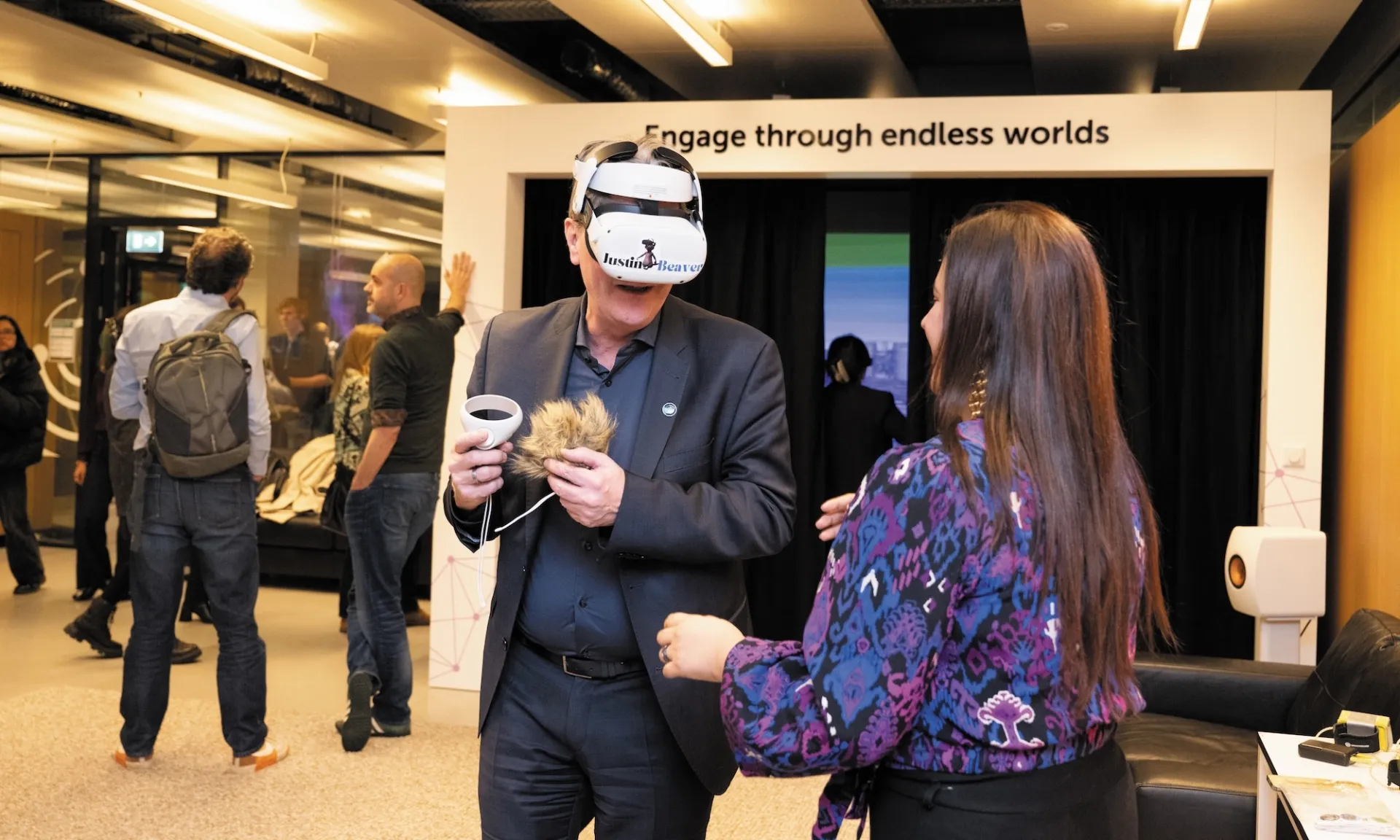
Another impactful initiative from ECDA is the Erasmus Data Collaboratory (EDC; also known as House of AI), an inclusive, open experimenting environment for data and AI, situated on Campus Woudestein. This physical hub facilitates hands-on action learning, research, experimentation, and valorisation. It serves as a space where the entire data science cycle can take place, from data engineering to data analysis, including data visualisation. The EDC acts as a central venue for meetups, workshops, masterclasses, and projects around data, AI, and immersive technologies. Here the recently opened Immersive Xperience Lab is also hosted. In the lab users can interact with digitally created environments, evoking a sense of physical presence through immersive technologies like Augmented Reality, Virtual Reality, and Mixed Reality, and holography.
Forging enterprises for positive societal impact
In 2021, EUR unveiled the 'Erasmus Incubator' strategy, aiming to synergise initiatives and fortify the entrepreneurial infrastructure at the university, concurrently promoting the creation of academic ventures. This strategic move culminated in the formation of Erasmus Enterprise (EE) in the spring of 2020, a separate holding entity wholly owned by EUR, albeit as a strategic programme with a provisional four-year tenure. EE is a driven and diverse entrepreneurial community which combines the networks of Tech Incubator YES!Delft, Erasmus Centre for Entrepreneurship (ECE) and Erasmus Research & Business Support (ERBS) to take startups to the next level. ECE is a leading international centre for entrepreneurship education and research. ERBS acts as an incubator for EUR, enabling scientists to start their own ‘scientific start-up’.
EE has developed a student journey fostering an entrepreneurial mindset to solve global challenges, with a focus on circular, energy transition, digital, and social. Through EE’s Impact Starting Guide, Startup Voucher, ‘Talent for Transition’ programme, and Erasmus University Challenge students receive coaching, build their network, and follow practical workshops. These initiatives have supported many innovations. Within the past two years (2022-2023), EE has engaged with 4,328 motivated student entrepreneurs who are committed to driving innovation. An example is OASYS NOW. The transdisciplinary startup team from RSM, Erasmus MC, and TU Delft developed a privacy-first way for people to understand their health data and be matched with Clinical Trials. Additionally, EE has developed an Academic Journey. By building an eco-system for Spin-Offs at EUR, the aim is to stimulate entrepreneurial thinking, helping academics valorise innovative ideas. Through several initiatives, such as 1-on-1 coaching and entrepreneurship onboarding, EE has engaged with 363 academics in the past two years and supported several spin-offs.
An incubator for Impact Centres
To further support EUR researchers in their effort to transform scientific knowledge into their own ‘scientific start-up’, Erasmus Research & Business Support (ERBS) functions as the academic incubator of EUR. With the help of ERBS, these scientific start-ups – known as academic impact centres - are: Auctio Metrix, ECRi, UniPro, BIG’R, LifeVersity, GovernEUR, and Erasmus OR Centre. ERBS creates impactful businesses by supporting EUR researchers in their effort to use high scientific knowledge and transform it into academic impact centres that can be LTD’s under EE Holding within two to three years. Thus, ERBS forms the link between the scientific knowledge of EUR and challenges of organisations and public institutions. ERBS provides support for transforming innovative ideas into viable businesses, ensuring that these visionary ideas make an impact on society. They offer support in the form of Business Development, pre-financing, and financial and administrative tasks, while providing a risk-free environment to grow, and guidance in businesses’ journeys to independence and self-sustainability.
Fostering entrepreneurial competencies and high-quality research
Also part of EE is Erasmus Centre for Entrepreneurship (ECE). This valorisation institute endorses and contributes to EUR’s mission to create positive societal impact by fostering entrepreneurial competencies and driving innovation through high-quality research and education—locally and globally. On the one hand, ECE provides a vehicle for engaged scholarship, offering academics and staff opportunities to interact with society and expand their societal impact. On top of that, they develop the entrepreneurial competencies of EUR’s students, researchers, and staff. In this way, they empower them to identify opportunities where others see obstacles, and act upon them to create (economic, societal, cultural etc.) value. ECE has identified four important strategic domains with Key Value Indicators (KVIs) – and not Key Performance Indicators (KPIs) - to define, both qualitatively and quantitatively, their impact in several local entrepreneurial ecosystems. Relying on KVIs instead of KPIs is a more accurate gauge of the value and impact of ECE’s products, services, or processes. These indicators are directly linked to ECE’s core value proposition and strategic goals. The key distinction lies in focus: while KPIs focus on the successful performance of activities today, KVIs look at the long-term impact. If you want to use KVIs in your own organisation, it is important to formulate them together with your team and crucial stakeholders. Measuring impact through KVIs requires discipline and action. It is not enough just to draft them; you need to evaluate every project, allocating time and other resources very efficiently, and periodically assess if these metrics match your core strategies and objectives.
Empowering women entrepreneurs through inclusive research and education
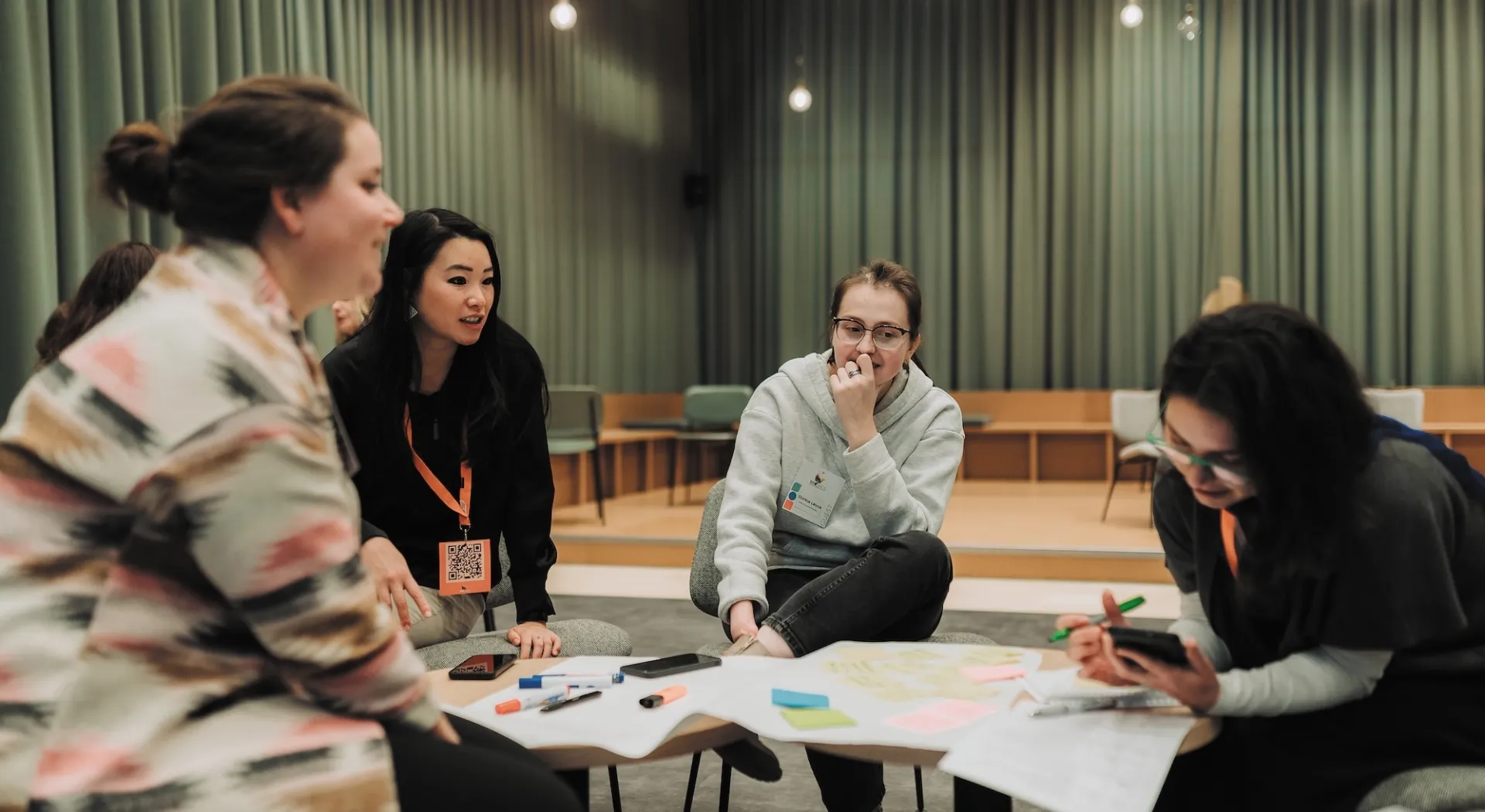
As one of ECE’s initiatives, SHELEADS+ drives the empowerment of women and gender equality in entrepreneurship through high-quality research, education, and meaningful connections. In 2019, Katty Hsu MSc, Inclusive Entrepreneurship and Research Lead at the ECE, embarked on a journey to transform the entrepreneurial landscape by making it more inclusive.
SHELEADS+ recognises and embraces a diverse spectrum of gender identities. Their commitment extends to those who are women some or all the time and anyone affected by gender-based marginalisation.
The journey was not an easy one. As it stood back then when she joined ECE, research and education around the entrepreneurial landscape was predominantly centred around the usual suspects: men of privilege. This focus was limiting and unrelatable to a body of diverse young entrepreneurial students looking to be inspired. Hsu understood the need to change the narrative in entrepreneurial education and research. This understanding resulted in the 2021 start of SHELEADS+, with the help of Erasmus Trustfonds (specifically, Ondernemende Vrouwen Fonds and the Jong Ondernemerschap Fonds) and the wider university network.
Closing the gender (data) gap
ECE's research team began with gender-disaggregated data collection and selected 100 women entrepreneurs in the local ecosystem. They gathered data, facts, and figures on this group from multiple data sources and experts (including EUR professors), resulting in insight reports and other communications. In looking at the latest figures, from 2023, it became clear that only 10% of Dutch startups/scaleups have been co-founded by a woman. This number highlights the urgency of contributing to and mobilising support for gender equality in entrepreneurship.
Beyond data collection, analysis, and dissemination, SHELEADS+ is about making meaningful connections. The initiative was kickstarted with a launch event in November 2021 that brought together different partners from the Rotterdam community and beyond, including students and academics, entrepreneurs, and industry professionals. The enthusiasm for that first event has resulted in three subsequent iterations. The fourth SHELEADS+ event will take place in Rotterdam on 29 November 2024.
To create better impact and reach communities globally, SHELEADS+ has built several partnerships including: a research project with the Lionesses of Africa and the African Development Bank (AFAWA) to empower high growth women entrepreneurs in 11 countries in the continent; a multi-year Code-V research report (in affiliation with the World Bank’s Women Entrepreneurs Finance Code); leading the ENIHEI Working Group on ‘Fostering women leadership in deep tech innovation: a holistic approach’; and an online educational platform for (aspiring) women entrepreneurs across the world (LauncHER), with a focus on developing countries and emerging markets (with Creatella Impact).
Though there are many initiatives across the world doing amazing work on this, Hsu believes meaningful change can only come when people work together:
According to the World Economic Forum, we need 134 years to close the global gender gap. That’s basically our mission, to contribute to closing the gender gap through closing the data gap and making more meaningful connections, to support women (entrepreneurs) around the world. But the issue is that we are not working together towards the same goal. We already see incredible things happen when we work together, and great partnerships being formed, but we would like to bring that to the next level.
To further spread the impact of their work, SHELEADS+ has now obtained a trademark that will allow them to share their knowledge in a more systematic way, and to build bridges across borders.
Looking forward, Katty and her dedicated team will continue to cultivate these collaborations and bridge the gender gap in entrepreneurship through closing the data gap and creating meaningful connections. With plans for more insights, skills and connections, their influence will only continue to grow and motivate a future generation of diverse, inclusive, and societally impactful entrepreneurs.
> Reach out to sheleads@ece.nl to explore partnership opportunities

Transforming impact ambitions into tangible results
Marit Schouten MSc, an impact researcher at the Impact Centre Erasmus (ICE), has dedicated the last ten years to working, researching, and above all understanding social impact – particularly in those enterprises that are focused on positive societal impact. These enterprises often have enthusiastic ambitions but encounter difficulty in devising a strategic pathway for transforming ambition into tangible results.
Inspired by this challenge, and supported with seed funding from UNIC4ER, a research team has been formed consisting of Schouten and Prof. Karen Maas from ICE; Agata Fortuna MSc, Dr Emine Mavi and Dr Gonca Ongan from Koç University’s Social Impact Forum; and Dr Seda Yalcin from VU Amsterdam. Together, they have embarked on a research journey that deepens their understanding of the gap between impact-ambition and impact-realisation and provides practical tools that can aid organisations in bringing to life their societally beneficial outcomes.
At the centre of this research, the concept of ‘means-end decoupling’ has been used for the first time to understand the disconnect between aims and results in social enterprises. As a first step, the team conducted a deep dive into the available literature. Following that, seven focus groups with participants from thirty-two different organisations were conducted. The sessions helped gather data to validate the relevance of the ‘means-end decoupling’ concept in real situations faced by the enterprises. The process highlighted new perspectives on the struggle of social enterprises in achieving their goals using the concept of means-end decoupling. As Schouten reflects:
From the literature review both internal and external factors emerged as causes for an enterprise to not achieve the impact goal that they have set. For example, external factors might be financial constraints, or they could be systemic issues, or it could be internal factors such as internal alignment and good business conduct that have an influence. But we also have some other perspectives from people saying, well, it's logical for these enterprises to have difficulties because often they don't know exactly how to achieve these social ambitions, and they need to learn how to work towards them. They view the search for impact-achievement through the lens of recoupling: a constant learning process how to couple means and ends.
Supporting while being supported
Though the research is still in its early stages, Schouten believes one of the most optimistic outcomes are the relationships forged between the academics and practitioners. Researchers often struggle with outreach, and getting participants to engage; however, through these focus groups and group discussions, participants are invested. They can directly express their concerns, influencing the research's trajectory based on their needs, making it practically – and mutually - relevant.
The team has presented their initial findings with an academic paper, at the Social Entrepreneurship Summit in Sofia, Bulgaria in August 2024. As the work moves forward, the team continues to keep their partners involved to ensure that results remain relevant to the social enterprises. For instance, they have recently designed an infographic that summarises their main findings for their stakeholders. Schouten is hopeful, as there is growing recognition of the importance of understanding and addressing the gap between impact-ambition and impact-achievement.
Moving forward, the team hopes to secure the funding needed to continue this journey of learning, and more importantly, to develop the necessary tools that will be instrumental in helping enterprises fulfil their full potential.
Lessons learned and future directions
One important lesson is that more structural and central coordination and support of engagement helps not only to make our research and education more engaged (and thus more impact-oriented), but also helps to create more impact through engagement – as its own separate portfolio. We do see many examples of more engaged and inter- or transdisciplinary research and education, but stronger efforts are necessary to enable and embed these practices across Schools and disciplines, creating synergies.
Although we have to be careful and respect the autonomy of our academics who developed individual connections with stakeholders, continuing to invest in our centrally organised stakeholder engagement (across portfolios) is the way forward. This can help us to make these networks more sustainable and coherent in the long term.
Integral to our impact are our communities. Cultivating students, alumni, employees, and our societal partners and stakeholders to create a societal impact with us allows us to enhance our own impact. It is important for us to stay connected with our communities through innovative communication channels and engaging events and activities, fostering a culture of reciprocity and mutual learning, where our communities feel valued. By demonstrating our impact and recognising the impact of our communities, we can mobilise and motivate them further.
Academic outreach is an important way to engage with society and to enhance access and equity of our education. We have to build upon the results we achieved, and to find ways to sustain our efforts to battle educational inequalities, that – if we do nothing – easily become even worse.
An important vehicle in connecting our university with society is fostering an environment for entrepreneurship. We have engaged in many efforts to foster such an environment, and there are some organisational challenges from which we can learn. This holds true for the more traditional forms of (economic) entrepreneurship, when it comes to start-ups and other forms of economic valorisation of our knowledge. There should be clear guidelines that ensure proper allocation, recognition and rewarding for academic entrepreneurship. On a more general level, social or impact-driven enterprises, particularly within a university setting, deserve more attention and support. Creating an environment in which these enterprises can learn from each other’s experiences, and building a flexible structure to support them in a tailor-made way could be a step forward in better enabling them to achieve their impact ambitions.