Collaboration with and for the city of Rotterdam
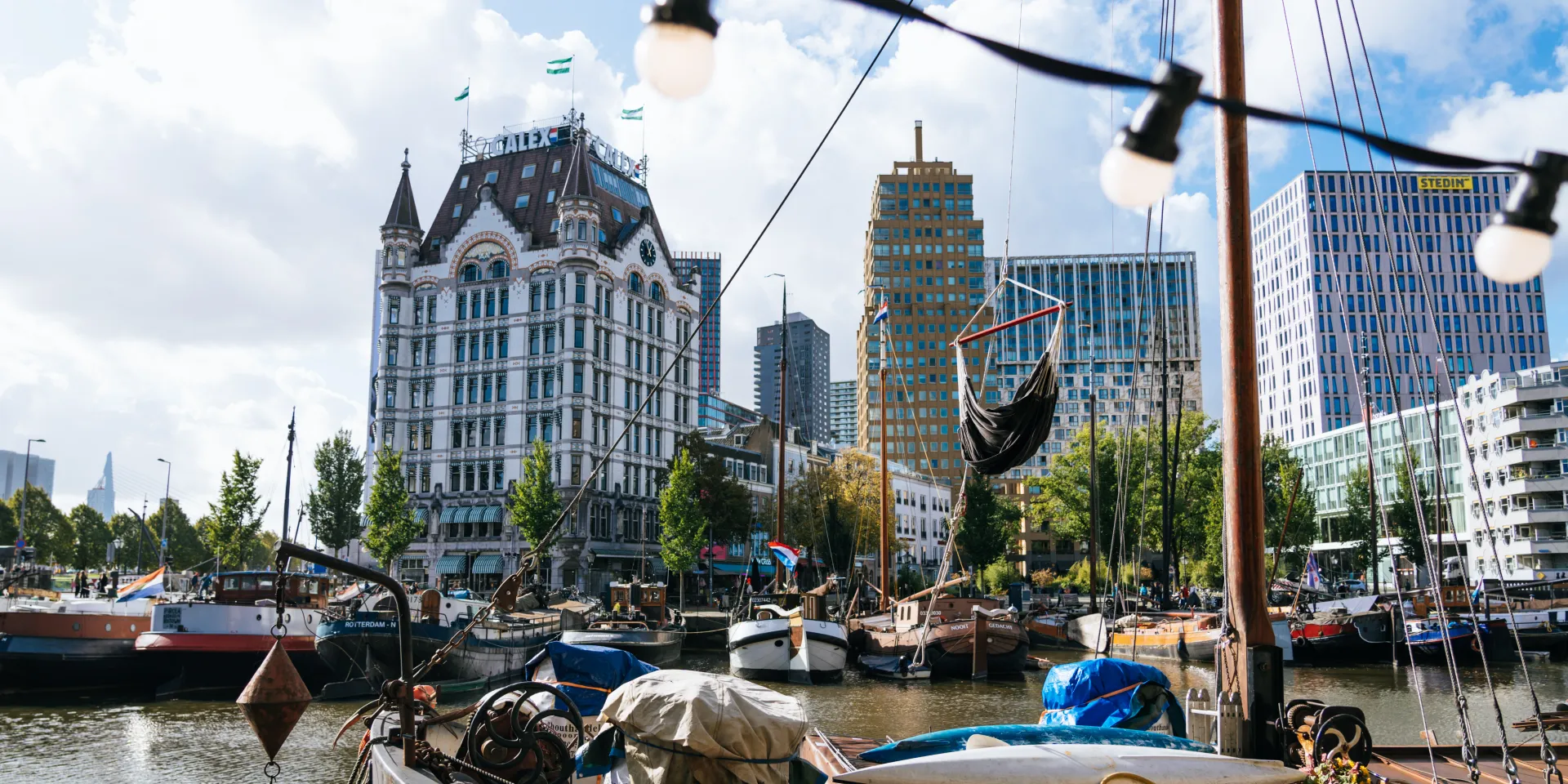
As you will note throughout this report, EUR has a long-term and enduring partnership with the Municipality of Rotterdam (since 2010) in which both parties commit to cooperate across many areas. An extensive knowledge infrastructure has emerged from this partnership over the years, and many research collaboration initiatives have gotten off the ground, such as Center for Effective Public Health In the larger Rotterdam area, the Knowledge Labs (KWP; Kennis Werkplaats), and Smart Port. The various collaborations are each unique: they have different genesis stories and their objectives, funding and composition also vary widely. The municipality of Rotterdam also plays an important role in several large-scale collaborative programmes like Convergence, UNIC and Cultuur&Campus.
EUR education is also enriched by multiple collaborations with the City of Rotterdam, in which our students are encouraged to engage more intensively with urban issues. The EV student initiative and IatC are part of the EUR strategy and aim to get students more involved in working on solutions to issues facing the city. In addition, Erasmus masters students can participate in the annual Rotterdam Thesis Award, which is awarded to a thesis relevant to Rotterdam. In the National City Deal programme, both the City of Rotterdam and EUR with other knowledge institutions participate to involve students in the city. In the years to come our collaboration with the Municipality of Rotterdam will continue in many ways.
To learn from our ongoing collaboration with the City of Rotterdam, an evaluative study took place in 2021, commissioned by EUR and the Municipality of Rotterdam. Amongst other things, this study highlighted the value of collaborating around clear themes, helping governmental officials and researchers to find each other. To enable this, it is important to invest in structural relationships across multiple levels of both EUR and the City of Rotterdam; and to utilise existing partnerships for further collaborations. An example of this is the collaboration between ESL and the Public Prosecution Service, the Rotterdam Bar, and the Rotterdam District Court, which was renewed in December 2019.
Rotterdam Knowledge Labs
An image-defining outcome of the partnership between EUR and the Municipality of Rotterdam are the Knowledge Labs, in which scientists and representatives of the municipality work together on urban issues. Marco Bik MSc, knowledge coordinator within Rotterdam City Council, emphasises the importance and value of these collaborations:
When you make policy, it affects Rotterdammers. The Knowledge Labs bring science and policy together and ensure that important knowledge is reflected in the Municipality's approach. This makes our policy more scientifically based.
Before the official collaboration covenant was signed in 2010, there was already a lot of informal contact between EUR and Rotterdam. This provided fertile ground for the cooperation. Together with Bik, Marjolein Kooistra (communications advisor for the Knowledge Labs) was involved from the start, first for ESSB and later EUR-wide. Kooistra explains that such a collaboration, with frequent meetings, requires an investment of time and energy from both parties. ‘To build trust and gain insights, you have to learn to speak each other's language and work together on an equal footing.’
The power of networks
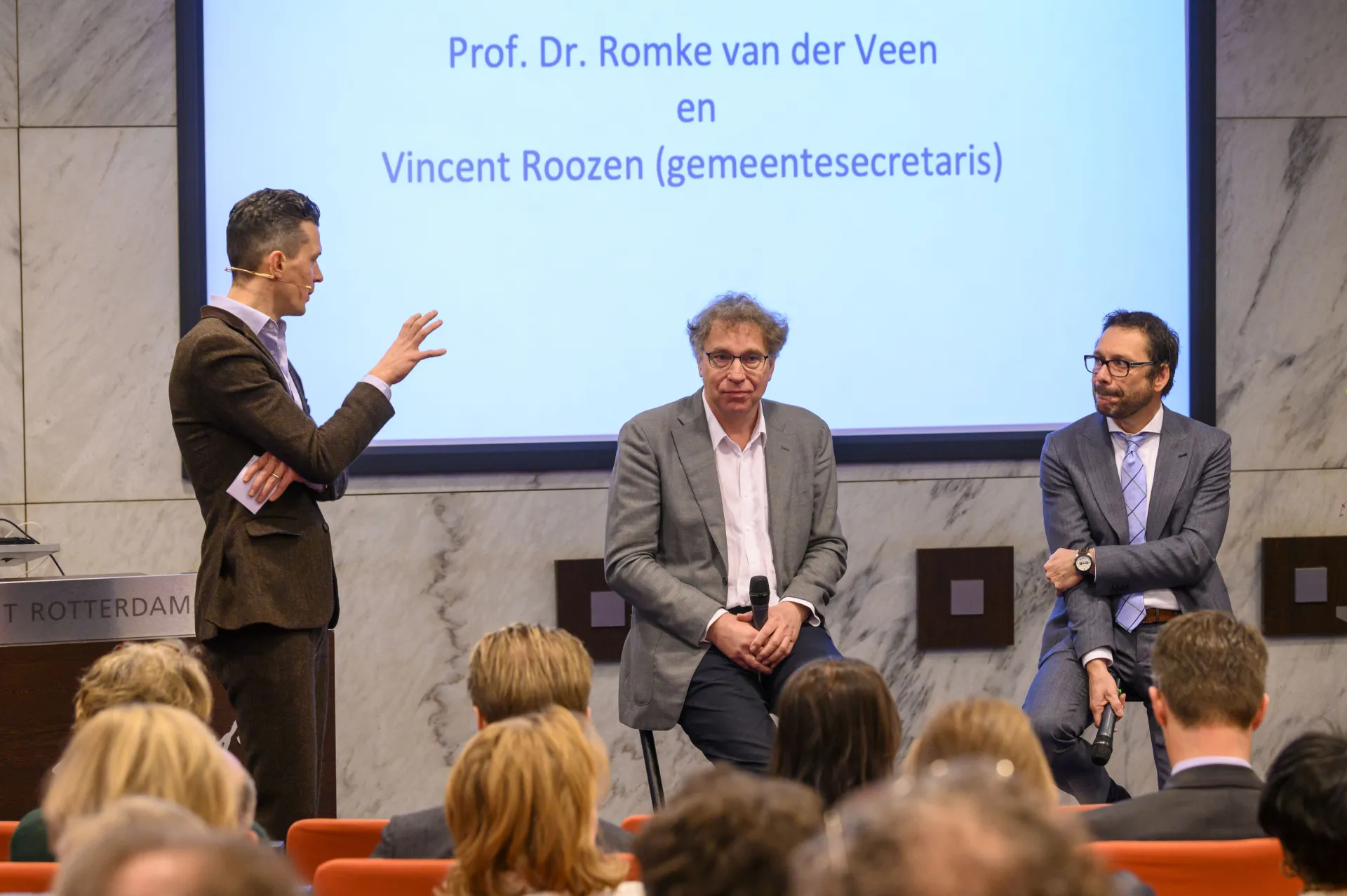
Each Knowledge Lab is based on an important topic for Rotterdam. Then experts from various parties are invited to be involved. Bik: 'Who is involved depends on the Knowledge Lab and the specific project. The budgets allocated by EUR and the municipality are often spent on things like workshops, research, coordination, communication and events. Knowledge Lab events have strengthened existing networks and created new ones. Kooistra: ‘A surprising by-product was that a network was started to develop across the city, of people who bumped into each other at the Knowledge Lab meetings'.The networks created during these events foster a lot of knowledge exchange. This was evident, for example, during the digital edition of the Rotterdam Knowledge Festival in 2021. Bik: 'Then we showed what all the Knowledge Workshops together have produced in terms of knowledge related to corona. The intensive online contact and collaborations were possible thanks to this existing network'. This is significant impact, which is difficult to quantify.
Intrinsic motivation and support
Participants’ informal networks and personal drive are important to the success and impact of the Knowledge Labs. ‘The Knowledge Labs are successful because the people involved, from the Municipality and the university, together have the idea; we are going to do something good for the city,’ says Bik.
At the same time, the Knowledge Labs are vulnerable, dependent on personal motivation. More structural support to share knowledge and best practices is required. Bik: ‘You could also set up this kind of network top-down, but that doesn't always make a lot of sense. There really needs to be an intrinsic motivation of those who acquire the knowledge (researchers) and of the policy officers to want to apply and pass on this knowledge. Only then will it really work'. The university and the municipality have many different collaborations and connections. It is important to share that knowledge and experience between them. Kooistra: ‘To keep the overview, it would be useful to have more structural support to share knowledge and best practices and support the organisation with that’.
A clear impact strategy is necessary to be able to make the investment of time and space to develop skills and build relationships. Kooistra: ‘Because impact is now a key strategic focus of the university, impact-focused research is also taken more seriously. Therefore, it is happening more, and impact-driven education is also being promoted.'
Bik is somewhat critical of the internal alignment: ‘There have been initiatives in many places to increase impact. You should make much more use of previous experiences. That does not happen or happens too little'. Kooistra also recognises this signal from the municipality: 'So much is being done now: for instance, through the many students doing assignments in an area like Feijenoord. People get research fatigued at some point. I think it's very important to take this on board when thinking about how we want to make an impact'.
The establishment of new Knowledge Labs continues. For instance, the municipality hopes to launch a Knowledge Lab on Culture, Sustainability and a Civic AI Lab soon. Kooistra and Bik are eager to support colleagues with their knowledge on impact-oriented activities.
> Do you have any questions about setting up such impact-oriented activities? Or would you like to collaborate with the municipality? Then feel free to contact Marjolein Kooistra (at: kooistra@essb.eur.nl) or Marco Bik (at: m.bik@rotterdam.nl).