LDE University Alliance
Driven by a commitment to contribute to solving significant social issues and connected by their location, Leiden University, TU Delft, and EUR turned their collaboration into a strategic alliance in 2012, the LDE Alliance. The high quality of academic expertise and the enormous range of their largely complementary portfolios gives LDE the ability to successfully cooperate in an inter- and transdisciplinary manner. Its current strategic period focuses on four societal themes: Sustainable, Inclusive, Healthy, and a Digital Society. The LDE alliance works closely with societal partners in South-Holland (such as municipalities and provinces) to contribute more effectively to the development of the region. Most importantly, by developing new joint education programmes (in the form of degree programmes and minors) and opening up educational systems to each other’s students, the alliance facilitates cross-university student exchange.
LDE’s interdisciplinary centres and programmes seek to form a basis for further academic and public-private partnerships. The LDE Centre for BOLD Cities (Big, Open and Linked Data Cities), for instance, is dedicated to conducting research, projects, and activities centred around the citizen and government perspective within the city. Departing from its SHARED values – a criteria that qualifies ‘good’ engagement, the Centre for BOLD Cities critically investigates the use of technologies—such as ‘big data’ and digital technology for (social) policy—by governments and municipalities. Additionally, they offer several educational programmes. One is the interdisciplinary minor ‘Smart and SHARED Cities’ where students learn about the opportunities offered by new technology and about the social issues that arise from it.
In the following video, some students share their thoughts on the LDE minor “Smart and SHARED cities”.

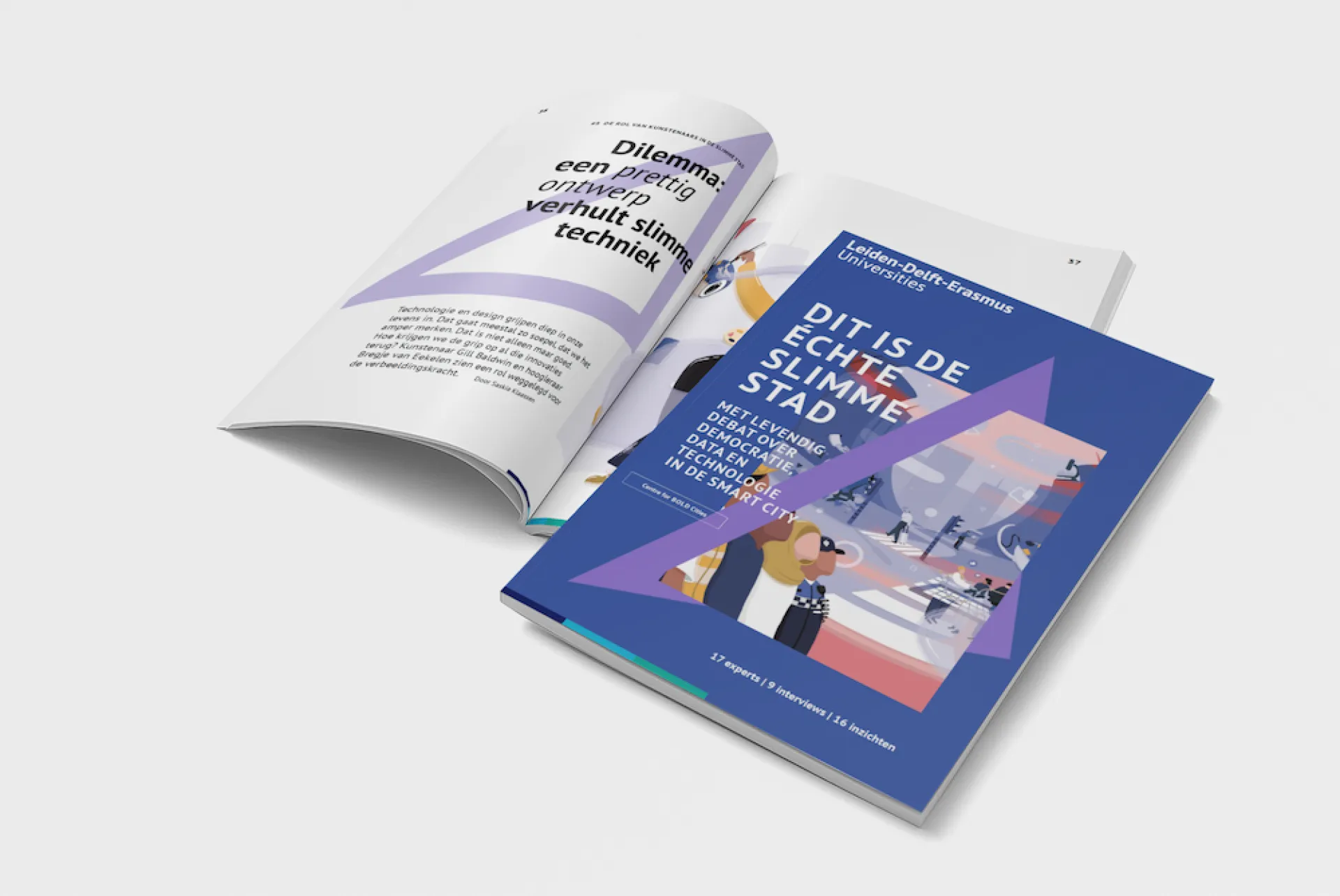
Last June (2024), the Centre for BOLD Cities published their White Paper titled: ‘This is the real smart city’ (NL: Dit is de echte slimme stad) in which scientists and practical experts discuss smart cities, citizen participation and governance related themes in double interviews.
Another LDE centre is the GMD centre. This interdisciplinary research centre focuses on the governance of migration and diversity. As a strong and cohesive research network, it works together with students, academics, and practitioners. Combining strengths, LDE GMD is one of the biggest scholarly communities and amongst the world’s leading research centres for the study of migration and migration-related diversity from a governance perspective. In this capacity, they conduct research to inform governmental migration policies. One example is a fact sheet exploring the various policy options that can be categorised as ‘reception in the region’, with a focus on offering protection to refugees and displaced persons. LDE GMD has also developed the Master specialisation ‘Governance of Migration and Diversity’. Offering one of five different tracks with courses at six different Schools across all LDE-universities, this master specialisation allows students to develop a multidisciplinary perspective and understanding of migration and diversity Further, LDE GMD leads the ‘Rotterdam Inclusivity Project’ which has focused on investigating discrimination in Rotterdam and contributing its insights to improve municipal policymaking. In May 2024, this collaboration was extended to ensure the continuation of structural research into patterns of discrimination, racism, and inequality in Rotterdam for the next four years.